Failings in lifting operations on Ireland’s construction sites
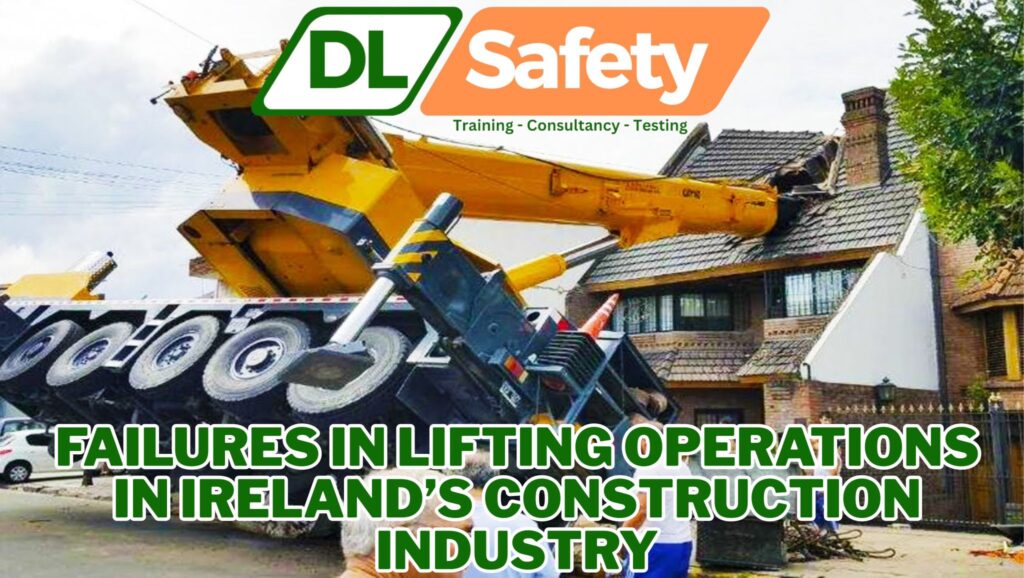
Failings in lifting operations on Ireland’s construction sites are too often avoidable. Here’s a concise guide to lessons learned, improvements, and preventative actions.· Too many incidents stem from:· Under-planned lifts and site-specific risk assessments· Unclear roles and insufficient lifting competence· Inadequate pre-use inspections and maintenance of gear· Damaged or inappropriate rigging and accessories· Communication gaps and ambiguous signals· Lifts in adverse weather/ground conditions without controls· Overloads or last-minute modifications without verification· Poor documentation and weak post-lift reviews Improvements we should implement (system-wide)· Lift planning: formal lifting plan for every lift; define load, rigging method, path, exclusion zones, emergency procedures; sign-off from a competent lifting supervisor· Competence and roles: qualified personnel; designate lifting supervisor and a dedicated slinger/banksman; up-to-date training records· Equipment and inspection: GA1 /GA2 Thorough Examinations by a competent person; rigorous daily pre-use checks; retire damaged gear; maintain an equipment register· Rigging and load handling: proper rigging plans, correct sling types, angles, and capacities; verify load weight and crane capacity; no improvisation· Communication and signaling: clear signals or radios; dedicated signaler; stop-the-lift protocol· Site conditions and weather: assess ground, wind, and environmental factors; suspend lifts when necessary; use ground protection· Documentation and learning: lift plan, risk assessment, method statement, and checklists accessible on site; capture lessons learned; near-miss reporting· Independent verification: engage third-party specialists for complex lifts and periodic verifications Preventative measures you can deploy today· Make lifting plans and risk assessments mandatory before the first lift· Establish Stop-the-Job authority for any risk; empower all workers to pause work· Standard daily pre-use checks for cranes, hoists, slings, and rigging; tag and remove damaged gear· Maintain a live equipment register with inspection dates and maintenance needs· Ensure qualified lifting supervisors and riggers; verify credentials on site· Implement a clear communications plan and practice signaling– Schedule lifts away from adverse weather; ensure outriggers, mats, and ground protection are suitable– Use digital tools: store lifting plans, checklists, and photos; feed audits into continuous improvement– Conduct regular post-lift debriefs; update SOPs accordingly– Engage third-party specialists for complex lifts and periodic verifications Contact DL Safety Phone: 085 8316885, Email: info@dlsafety.ie, Website: www.dlsafety.ie
Ground Stability: The Unseen Foundation of Every Successful Crane Lift in Ireland
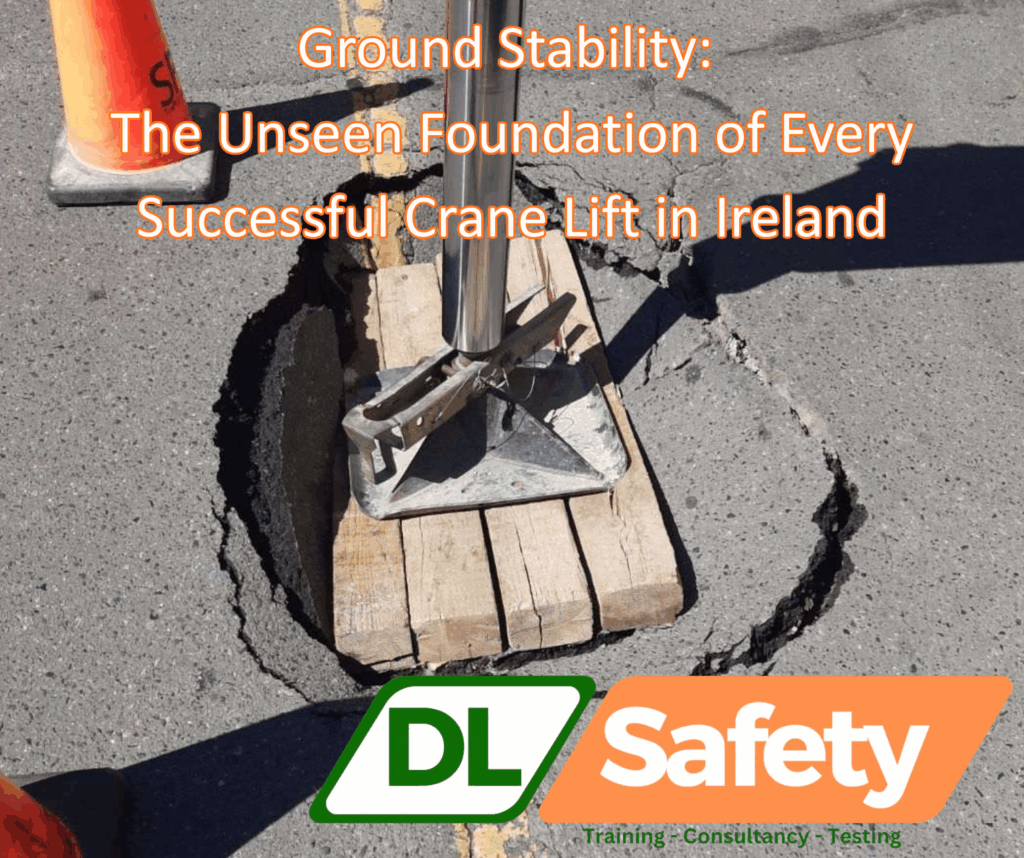
Before a mobile crane ever arrives on site, a critical assessment must take place – not of the crane itself, but of the ground it will stand on. The stability of the entire operation hinges on this often-overlooked factor. Under Irish and European health and safety law, the principal duty falls on the Project Supervisor Construction Stage (PSCS) and the crane owner/operator to ensure the ground is adequate. This isn’t just a best practice; it’s a legal requirement. What does “adequate” mean? It means ground with sufficient bearing capacity to support the immense pressures of the crane’s outriggers or crawlers, fully laden. A visual inspection is not enough. Hidden voids, utilities, or variable soil types can lead to catastrophic failure. This is where CBR (California Bearing Ratio) testing becomes non-negotiable. A CBR test provides a proven, quantifiable measure of the soil’s strength, forming the basis for a certified design of crane mats or a stable working platform as required. Key Standards You Need to Know: · EN 13001 / EN 14439: These European standards for crane design and safety inherently require that cranes are erected on “firm, uniform, and adequately bearing ground” as specified by the manufacturer. You cannot comply with these without verifying ground conditions.· BS 7121 (British Standard, widely referenced): Part 1 on “Safe Use of Cranes” has detailed requirements for ground assessment, including the need for a competent person to assess the suitability and for the use of crane mats or grillages where necessary. The Bottom Line: Assuming the ground is “good enough” is a massive and unacceptable risk. A proper ground investigation, including CBR testing, is a direct investment in safety, compliance, and project continuity. hashtag#CraneSafetyhashtag#LiftingOperationshashtag#ConstructionSafetyhashtag#CBRTestinghashtag#GeotechnicalEngineeringhashtag#IrishConstructionhashtag#PSCShashtag#HealthAndSafetyhashtag#MobileCranehashtag#RiskManagement