
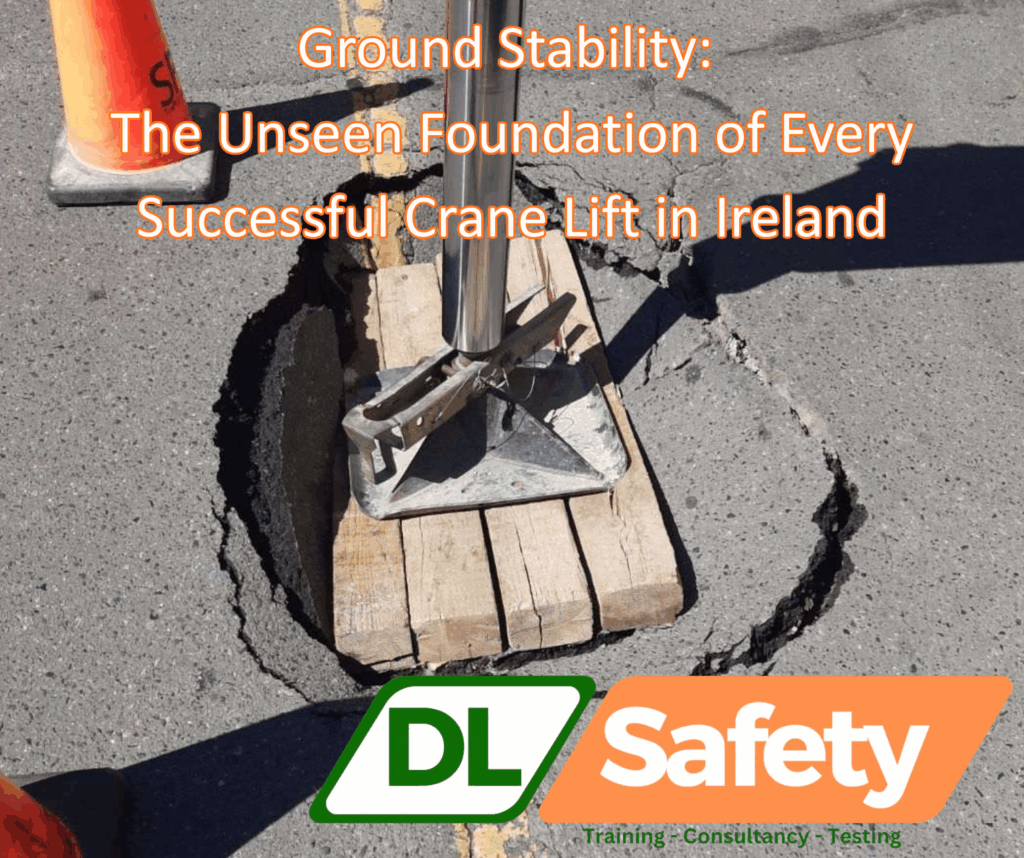
Before a mobile crane ever arrives on site, a critical assessment must take place – not of the crane itself, but of the ground it will stand on. The stability of the entire operation hinges on this often-overlooked factor.
Under Irish and European health and safety law, the principal duty falls on the Project Supervisor Construction Stage (PSCS) and the crane owner/operator to ensure the ground is adequate. This isn’t just a best practice; it’s a legal requirement.
What does “adequate” mean? It means ground with sufficient bearing capacity to support the immense pressures of the crane’s outriggers or crawlers, fully laden. A visual inspection is not enough. Hidden voids, utilities, or variable soil types can lead to catastrophic failure.
This is where CBR (California Bearing Ratio) testing becomes non-negotiable. A CBR test provides a proven, quantifiable measure of the soil’s strength, forming the basis for a certified design of crane mats or a stable working platform as required.
Key Standards You Need to Know:
· EN 13001 / EN 14439: These European standards for crane design and safety inherently require that cranes are erected on “firm, uniform, and adequately bearing ground” as specified by the manufacturer. You cannot comply with these without verifying ground conditions.
· BS 7121 (British Standard, widely referenced): Part 1 on “Safe Use of Cranes” has detailed requirements for ground assessment, including the need for a competent person to assess the suitability and for the use of crane mats or grillages where necessary.
The Bottom Line: Assuming the ground is “good enough” is a massive and unacceptable risk. A proper ground investigation, including CBR testing, is a direct investment in safety, compliance, and project continuity.
hashtag#CraneSafetyhashtag#LiftingOperationshashtag#ConstructionSafetyhashtag#CBRTestinghashtag#GeotechnicalEngineeringhashtag#IrishConstructionhashtag#PSCShashtag#HealthAndSafetyhashtag#MobileCranehashtag#RiskManagement
