
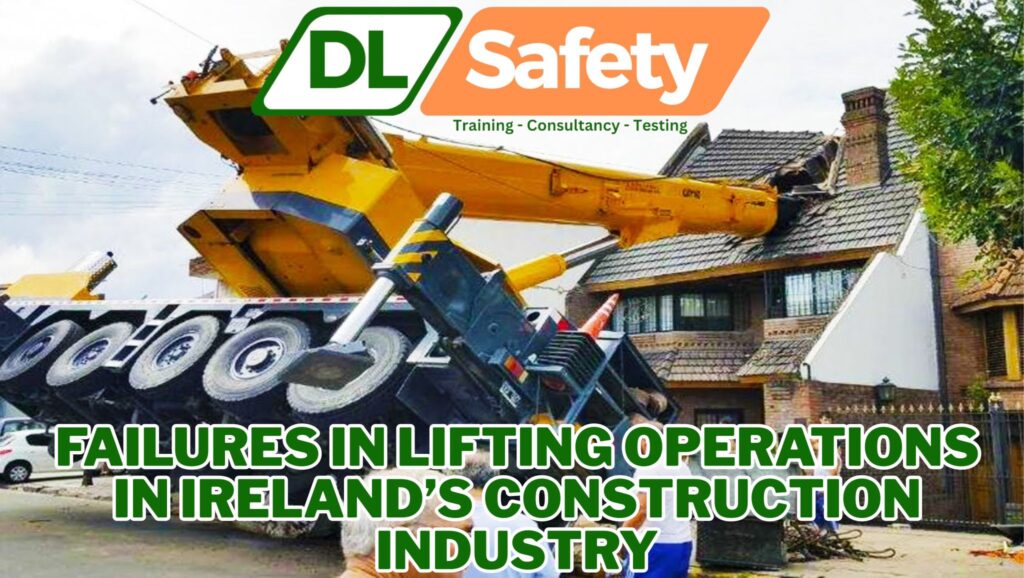
Failings in lifting operations on Ireland’s construction sites are too often avoidable. Here’s a concise guide to lessons learned, improvements, and preventative actions.
· Too many incidents stem from:
· Under-planned lifts and site-specific risk assessments
· Unclear roles and insufficient lifting competence
· Inadequate pre-use inspections and maintenance of gear
· Damaged or inappropriate rigging and accessories
· Communication gaps and ambiguous signals
· Lifts in adverse weather/ground conditions without controls
· Overloads or last-minute modifications without verification
· Poor documentation and weak post-lift reviews
Improvements we should implement (system-wide)
· Lift planning: formal lifting plan for every lift; define load, rigging method, path, exclusion zones, emergency procedures; sign-off from a competent lifting supervisor
· Competence and roles: qualified personnel; designate lifting supervisor and a dedicated slinger/banksman; up-to-date training records
· Equipment and inspection: GA1 /GA2 Thorough Examinations by a competent person; rigorous daily pre-use checks; retire damaged gear; maintain an equipment register
· Rigging and load handling: proper rigging plans, correct sling types, angles, and capacities; verify load weight and crane capacity; no improvisation
· Communication and signaling: clear signals or radios; dedicated signaler; stop-the-lift protocol
· Site conditions and weather: assess ground, wind, and environmental factors; suspend lifts when necessary; use ground protection
· Documentation and learning: lift plan, risk assessment, method statement, and checklists accessible on site; capture lessons learned; near-miss reporting
· Independent verification: engage third-party specialists for complex lifts and periodic verifications
Preventative measures you can deploy today
· Make lifting plans and risk assessments mandatory before the first lift
· Establish Stop-the-Job authority for any risk; empower all workers to pause work
· Standard daily pre-use checks for cranes, hoists, slings, and rigging; tag and remove damaged gear
· Maintain a live equipment register with inspection dates and maintenance needs
· Ensure qualified lifting supervisors and riggers; verify credentials on site
· Implement a clear communications plan and practice signaling
– Schedule lifts away from adverse weather; ensure outriggers, mats, and ground protection are suitable
– Use digital tools: store lifting plans, checklists, and photos; feed audits into continuous improvement
– Conduct regular post-lift debriefs; update SOPs accordingly
– Engage third-party specialists for complex lifts and periodic verifications
Contact DL Safety Phone: 085 8316885, Email: info@dlsafety.ie, Website: www.dlsafety.ie
