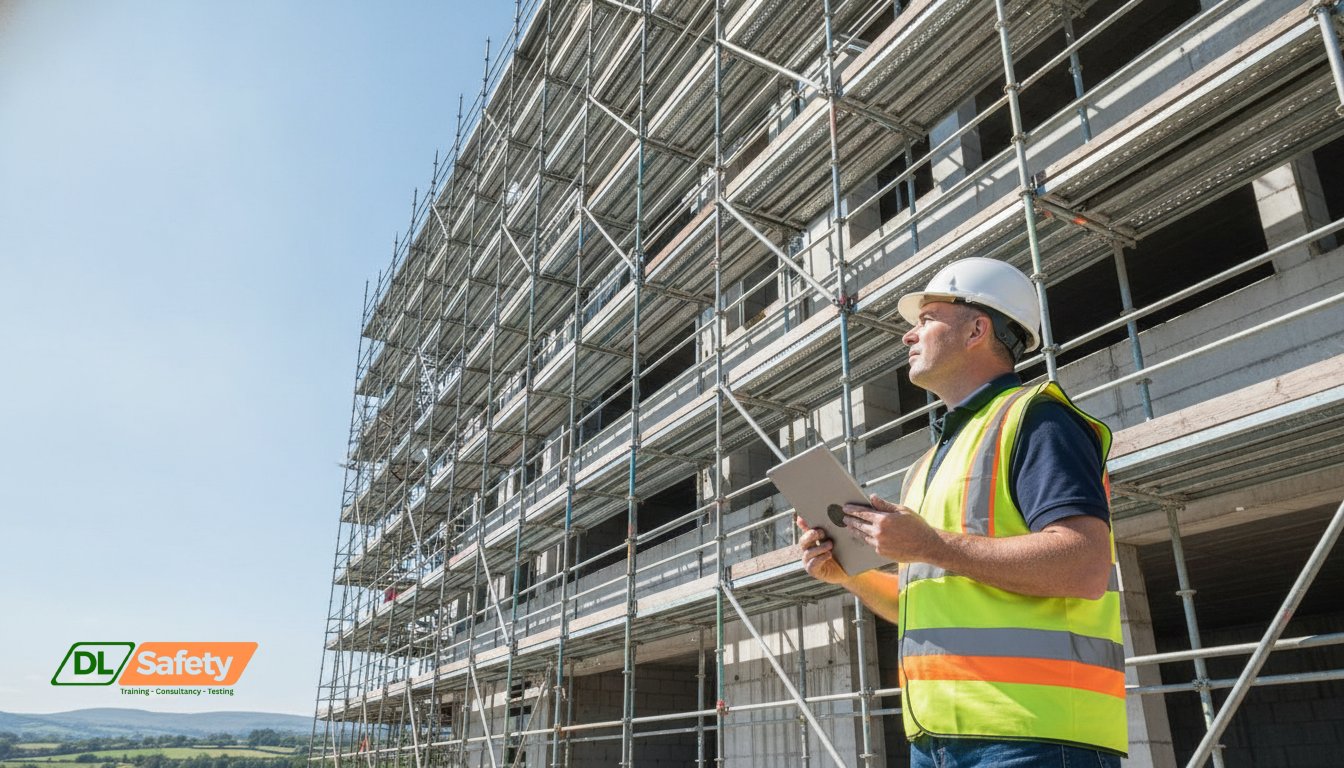
If you believe your scaffolding is safe simply because it was signed off on day one, you’re overlooking the most critical element of site safety: the rigorous, ongoing cycle of inspection. It’s a common misconception that compliance is a “set and forget” task, yet failing to stay on top of the scaffolding inspection requirements Ireland mandates is one of the fastest ways to face HSA fines or a total site shutdown. We know that the confusion surrounding GA3 versus GA1 forms can be a major source of stress, especially when you’re trying to balance project deadlines with strict safety protocols.
This guide is designed to help you master the statutory requirements for 2026, ensuring your project stays on track and your workers stay protected. You’ll gain a clear understanding of the mandatory seven-day inspection schedule and the specific events, such as adverse weather, that trigger an immediate re-evaluation. We’ll also demystify the legal definition of a “Competent Person” so you can appoint inspectors with total confidence. At DL Safety, we’re committed to helping you manage these statutory records properly, allowing you to focus on the build whilst we help you navigate the complexities of regulatory compliance through our expert site audits and professional support.
Key Takeaways
- Identify the core scaffolding inspection requirements Ireland mandates under the 2013 Construction Regulations to ensure your site remains fully compliant and safe.
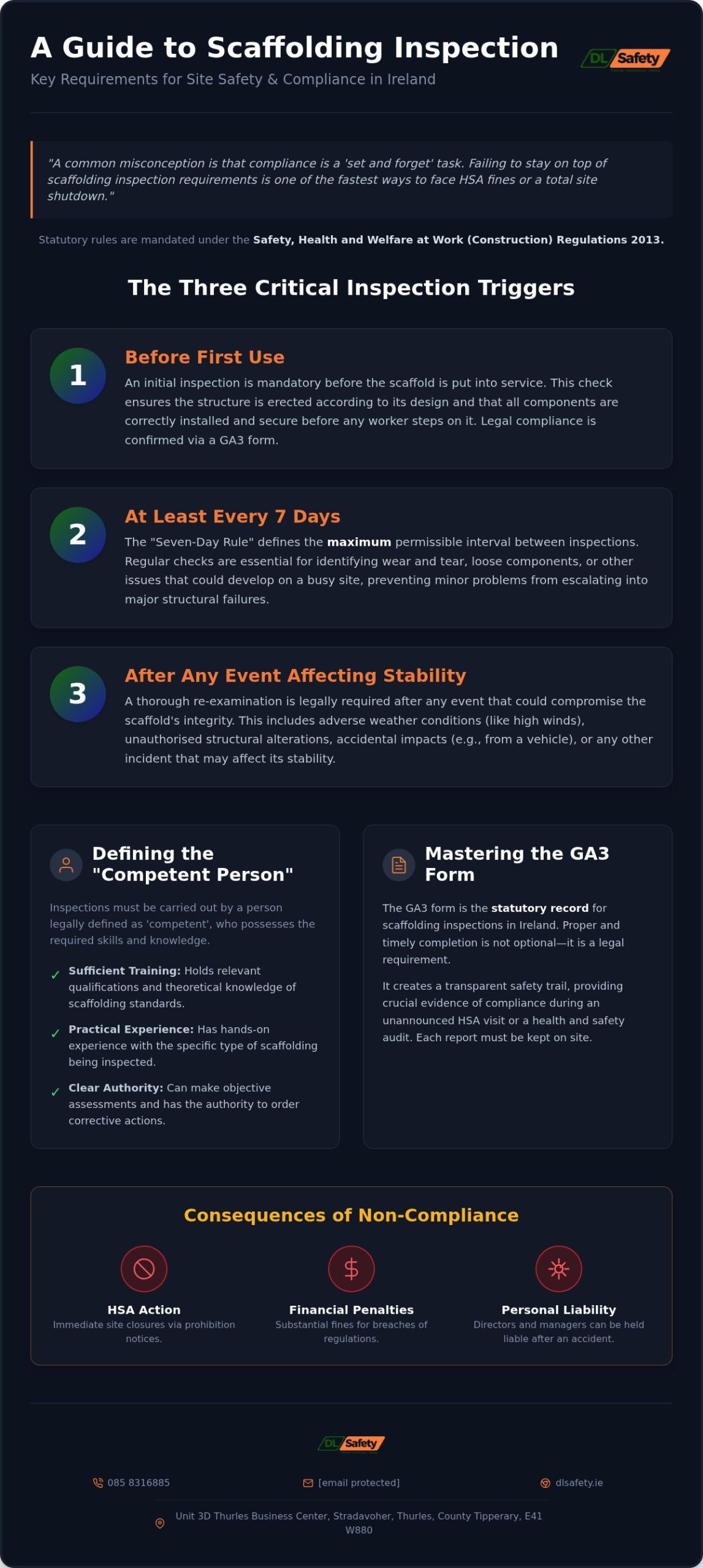
- Master the three critical triggers for statutory inspections, including the mandatory seven-day rule and checks required after adverse weather conditions or structural alterations.
- Clarify the legal definition of a “Competent Person” to ensure your oversight team possesses the necessary training and practical experience required by the HSA.
- Learn how to accurately complete GA3 statutory records to maintain a transparent safety trail that simplifies your health and safety audits.
- Discover how DL Safety simplifies complex compliance through Monthly Safety Support Packages; contact our team at Unit 3D Thurles Business Centre, Stradavoher, Thurles, County Tipperary, E41 W880, or via info@dlsafety.ie.
Scaffolding Inspection Requirements in Ireland: The Legal Framework
Understanding the legal framework behind site safety isn’t just a box-ticking exercise; it’s the foundation of every secure construction project in the country. The Safety, Health and Welfare at Work (Construction) Regulations 2013 provide the statutory rules that every contractor must follow. These regulations, specifically when read alongside the HSA Code of Practice for Access and Working Scaffolds, establish the scaffolding inspection requirements Ireland demands to protect workers from the industry’s most significant risk: falls from height. Whilst these documents can seem dense, they exist to prevent the fatal accidents that still occur when equipment isn’t properly managed.
Failing to meet these standards carries heavy consequences that go far beyond a slap on the wrist. The Health and Safety Authority (HSA) has the power to issue prohibition notices, which can lead to immediate site closures and substantial fines. Beyond the financial impact, non-compliance leaves directors and project managers personally liable if an accident occurs. By adhering to general scaffolding safety standards and Irish statutory law, you create a transparent safety record that protects both your people and your business reputation.
The 2026 Standard for Site Safety
As we move through 2026, the focus has shifted from simple mechanical checks to a more holistic view of worker behaviour. Modern safety standards prioritise a culture where every team member feels empowered to report a loose ledger or a missing toe board. The Project Supervisor Construction Stage (PSCS) holds the ultimate legal duty to coordinate these efforts, ensuring that all temporary works are managed with the same rigour as the permanent structure. At DL Safety, we help PSCS teams bridge the gap between complex law and daily site reality through our professional health and safety site audits.
Key Statutory Provisions
Regulations 30 through 40 of the Construction Regulations provide specific mandates for “access and working scaffolds” that cannot be ignored. These provisions detail how structures must be designed, erected, and maintained to ensure stability. It’s vital to distinguish between a routine inspection and a “thorough examination.” Whilst a weekly check is mandatory, a thorough examination is required after any event that might compromise the structure, such as high winds or a vehicle impact. Properly documenting these findings is the only way to prove compliance during an unannounced HSA visit.
If you’re finding it difficult to keep up with these evolving requirements, our team is here to act as your trusted advisor. You can reach DL Safety at 085 8316885 or via email at info@dlsafety.ie. Our office is located at Unit 3D Thurles Business Center, Stradavoher, Thurles, County Tipperary, E41 W880. For more information on our Monthly Safety Support Packages, visit www.dlsafety.ie.
The Three Critical Inspection Triggers for Scaffolding
Meeting the scaffolding inspection requirements Ireland enforces is not a “one and done” task; it is a continuous cycle of oversight throughout the project’s life. To maintain a safe site, you must recognise the three specific legal triggers that mandate a fresh inspection. The first occurs before the scaffold is put into use for the very first time. This initial check ensures the structure matches the design and that every component is secure before workers ever set foot on the boards. A handover certificate from the erector is standard, but the statutory inspection recorded on a GA3 form is what confirms legal compliance.
The second trigger is the “Seven-Day Rule.” This is often misunderstood as a target, but it’s actually the maximum permissible gap between safety checks. If your last inspection was on a Monday morning, the next must be completed no later than the following Monday. Many proactive site managers choose a shorter interval to account for the heavy wear and tear of a busy site. This recurring schedule is a cornerstone of the HSA Code of Practice for Scaffolding, ensuring that minor issues don’t escalate into structural failures.
The third trigger involves any event likely to affect the stability of the structure. This is a broad category that requires a “Trusted Advisor” approach to site management. If you’re unsure whether an event warrants a re-inspection, it’s always safer to proceed with one. Our team at DL Safety can help you establish these protocols through our Monthly Safety Support Packages, ensuring your site remains compliant regardless of external pressures.
Adverse Weather and Stability Factors
Weather in Ireland is notoriously unpredictable, and high winds are a primary threat to scaffold integrity. You don’t need to wait for a named storm to trigger a re-inspection. Any period of high winds that could displace boards or stress tie-ins necessitates a check. Similarly, torrential rain can lead to ground subsidence, potentially leaving sole boards unsupported. If the ground conditions change, the original stability calculations may no longer apply, making an immediate inspection vital for worker safety.
Post-Alteration Inspections
Structural alterations are the final critical trigger. A “substantial change” includes anything from removing a tie to accommodate a delivery to adding new lifts or spans. Even if the change seems minor, it can shift the load-bearing dynamics of the entire structure. You must ensure the scaffold still aligns with the original design intent and record these alterations in your site’s safety trail. Keeping these records accurate is much easier when you have a dedicated partner to lean on.
For expert guidance on managing your site records or to book a professional audit, contact us at 085 8316885 or email info@dlsafety.ie. You can also visit our office at Unit 3D Thurles Business Center, Stradavoher, Thurles, County Tipperary, E41 W880. Discover more about our services at www.dlsafety.ie.
Defining the “Competent Person” for Scaffolding Oversight
The term “competent person” is frequently used in site meetings, but its legal weight is often underestimated. Under the Construction Regulations 2013, competence is defined as a combination of sufficient training, knowledge, and practical experience. For anyone tasked with meeting the scaffolding inspection requirements Ireland demands, this means they must possess the ability to not only identify a defect but also understand the risk it poses to the entire structure. An inspector’s responsibility whilst on the scaffold is to conduct a methodical physical check of every critical component, from the base plates and sole boards to the guardrails and tie-ins.
Verifying the credentials of an inspector is a vital step for any Project Supervisor Construction Stage (PSCS). You should look for a clear history of industry-literate training alongside a proven track record on similar projects. A competent inspector acts as a proactive problem solver, ensuring that minor misalignments are corrected before they become statutory breaches. If you are unsure about the credentials of your current oversight team, DL Safety provides professional health and safety site audits to help you verify that your site is in safe, capable hands.
Training vs. Experience
Whilst a CSCS (Construction Skills Certification Scheme) card is the essential baseline for scaffolding work in Ireland, it is only one part of the competence puzzle. Formal training provides the theoretical foundation, but true competence is forged through years of practical site experience. We recommend that supervisors also complete a dedicated management and inspection course. This advanced training enables them to spot subtle defects, such as hairline fractures in timber planks or slightly loose couplers, which an inexperienced eye might easily miss. Balancing these two attributes is the only way to ensure total regulatory compliance.
Internal vs. External Inspectors
Many firms utilise an in-house competent person for their weekly checks, which can be a practical and cost-effective solution. However, internal staff can sometimes face conflicting pressures between project deadlines and safety protocols. This is when bringing in external health and safety compliance Ireland experts becomes invaluable. An external consultant offers an objective, unbiased perspective that prioritises safety above all else. At DL Safety, we act as your trusted advisor, providing the high-level expertise needed to demystify complex regulations and maintain a rigorous inspection regime.
For more information on how our Monthly Safety Support Packages can support your site team, please contact us at 085 8316885 or email info@dlsafety.ie. You can also visit our office at Unit 3D Thurles Business Center, Stradavoher, Thurles, County Tipperary, E41 W880, or browse our full range of services at www.dlsafety.ie.
Mastering the GA3 Form and Statutory Records
The GA3 form, formally titled the Report of Results of Inspections of Work Equipment for Working at Height, is the definitive statutory document for recording your safety checks. It’s not merely a piece of administrative paperwork; it’s your primary legal defence in the event of an audit or incident. Meeting the scaffolding inspection requirements Ireland mandates involves more than just a visual check; it requires a meticulous written record that proves the structure was safe at a specific point in time. These forms must be kept on-site for the duration of the project and remain available for immediate review. Whilst many sites are moving towards digital registers for better tracking, the law requires that these records are accessible to an inspector the moment they walk onto the site.
A properly completed record must include the precise location of the scaffold, a clear description of the equipment, and any findings or defects discovered during the walkaround. If a defect is found, the GA3 must also document the remedial action taken to fix it. If you’re looking to ensure your documentation is bulletproof, you can partner with DL Safety for professional audit support. We help you move beyond simple “tick-box” exercises to create a robust safety trail that protects your workers and your business.
What a Compliant GA3 Record Must Show
Every GA3 entry needs to clearly identify the specific scaffold being inspected. On a large site with multiple structures, vague descriptions like “Scaffold A” won’t suffice. You must include the date and time of the inspection alongside the signature of the competent person. This signature is a legal declaration that the structure is safe for use. If defects are noted, the record shouldn’t be closed until the remedial actions are signed off, ensuring there is no gap in your safety history.
Common Pitfalls in Scaffold Documentation
The most dangerous mistake a site manager can make is treating the GA3 as a “tick-box” exercise without a genuine physical assessment. This complacency often leads to the second major pitfall: back-dating records. Back-dating is considered fraud and can lead to severe legal penalties if discovered during a routine HSA inspection. It’s vital that the GA3 is updated in real-time, reflecting the actual conditions on-site. If an inspector finds that your records don’t match the physical reality of the scaffold, your entire safety management system will be called into question.
For expert guidance on maintaining your statutory records, contact DL Safety at 085 8316885 or email info@dlsafety.ie. Our team is based at Unit 3D Thurles Business Center, Stradavoher, Thurles, County Tipperary, E41 W880. You can explore our full range of Monthly Safety Support Packages at www.dlsafety.ie.
Professional Safety Support: Simplifying Your Compliance
Compliance shouldn’t feel like a heavy weight that slows down your project’s momentum. At DL Safety, we believe that mastering the scaffolding inspection requirements Ireland enforces is about more than just checking boxes; it’s about building a robust foundation for site-wide safety. We integrate scaffolding oversight into our broader site audits, ensuring that every temporary structure is viewed as part of a larger, interconnected safety system. This holistic approach significantly reduces the administrative burden on site managers, who are often stretched thin between managing subcontractors and meeting tight deadlines. By shifting from a reactive mindset to a proactive safety strategy, you’re not just avoiding HSA fines; you’re investing in the long-term efficiency and reputation of your business.
Our Approach to Site Audits
Our methodical health and safety site audits are designed to uncover the hidden risks that routine weekly checks might overlook. We don’t just hand you a list of problems. Instead, we provide clear, actionable reports that go far beyond the basic requirements of a GA3 form, offering practical solutions for any defects found. Our goal is to help you centre safety as a core business value, transforming it from a legal hurdle into a mark of professional excellence. When your team sees that safety is managed with such rigour, it fosters a culture of integrity and care amongst everyone on-site.
Tailored Support Packages
Every project has its own unique challenges, which is why our monthly safety support Ireland service is built to be fully scalable. Whether you’re managing a small residential build or a complex industrial development, we offer access to expert advice on everything from standard tube-and-fitting setups to bespoke scaffolding designs. This consistent level of support ensures that your business maintains its hard-earned reputation for high standards. We act as your dedicated partner, taking the stress out of compliance so you can focus on delivering quality results for your clients.
If you’re ready to simplify your site safety and ensure total regulatory compliance, we’re here to help. You can reach the team at DL Safety by calling 085 8316885 or emailing info@dlsafety.ie. Our office is located at Unit 3D Thurles Business Center, Stradavoher, Thurles, County Tipperary, E41 W880. For a full overview of our services, including GA1 testing and safety statements, visit our website at www.dlsafety.ie.
Take Control of Your Statutory Scaffolding Compliance
Navigating the complex scaffolding inspection requirements Ireland enforces doesn’t have to be a constant source of site stress. By mastering the three critical triggers for inspection and ensuring your GA3 records are meticulously maintained, you protect your team and your business from unnecessary risk. True compliance relies on a keen eye that spots structural flaws before they become accidents, which is why the balance of formal training and practical site experience is so vital for any competent person. Proper documentation isn’t just a legal hurdle; it’s the foundation of a transparent and safe working environment.
At DL Safety, we bring professional GA1 and GA3 compliance expertise directly to your project through our comprehensive site audit services. Operating from Unit 3D Thurles Business Center, we act as your dedicated advisor to simplify regulatory demands and reduce your administrative burden. Ensure your site is fully compliant by viewing our Monthly Safety Support Packages at dlsafety.ie. You’ve got enough to manage with project deadlines and logistics; let us help you build a culture of safety that keeps your site running smoothly. Reach out today at 085 8316885 or email info@dlsafety.ie to start a conversation about your next project.
Frequently Asked Questions
How often must scaffolding be inspected in Ireland?
Scaffolding must be inspected before its first use, at least every seven days whilst it remains in place, and immediately after any event that could affect its stability. These scaffolding inspection requirements Ireland mandates ensure that gradual wear or sudden damage is identified before it leads to an accident. If the scaffold is altered or moved, it also requires a fresh inspection. Keeping to this strict schedule is the only way to remain compliant with the 2013 Construction Regulations.
What is the difference between a GA1 and a GA3 form for scaffolding?
A GA1 form is used for the thorough examination of lifting equipment, such as cranes or hoists. In contrast, the GA3 form is the specific statutory record for the scaffolding inspection requirements Ireland enforces for work at height equipment. Whilst both are essential for site compliance, using a GA1 form for a weekly scaffold check is a common error. Ensure your competent person uses the correct GA3 documentation to meet HSA standards during an unannounced site audit.
Can a site manager perform the scaffolding inspection?
A site manager can perform the inspection only if they meet the legal definition of a competent person. This means they must have the necessary training, such as a CSCS card or a management and inspection qualification, combined with enough practical experience to spot structural defects. If a manager lacks this technical knowledge, they must appoint a qualified internal or external inspector. Objectivity is key, so the person inspecting must feel empowered to fail a structure if it’s unsafe.
Do I need to re-inspect scaffolding after a storm?
Yes, you must conduct a re-inspection immediately after any storm or period of high winds that could have compromised the scaffold’s integrity. These weather events are considered stability-altering triggers under Irish law. The inspector should check for displaced boards, loose ties, and any signs of ground subsidence caused by heavy rain. Don’t wait for the next scheduled seven-day check; a storm-damaged scaffold is a high-risk structure that requires immediate professional verification from a trusted advisor.
How long should I keep scaffolding inspection records on-site?
You must keep your GA3 inspection records on-site and available for the duration of the construction project. The HSA requires these documents to be accessible at all times for unannounced site audits. Once a project is completed, it’s best practice to archive these records for at least five years in your safety file. Maintaining a clear, chronological history of inspections proves that you have consistently met your legal duties and prioritised worker safety throughout the entire build process.
What happens if a HSA inspector finds an unsigned GA3 form?
An unsigned GA3 form is viewed as a failure to inspect, which can lead to a prohibition notice and an immediate site shutdown. The HSA considers unsigned or incomplete records as proof that the scaffolding is not being managed safely. This can result in significant fines and increased scrutiny for your business. To avoid these penalties, ensure every inspection is signed and dated by the competent person the moment the check is finished, leaving no gaps in your compliance trail.
Does mobile tower scaffolding require a GA3 inspection?
Yes, mobile tower scaffolding falls under the same inspection requirements as fixed structures. It must be inspected before its first use and following any event that might affect its stability, such as being moved to a different ground surface. Whilst the seven-day rule applies if the tower stays in one place, mobile units often require more frequent checks due to their portable nature. A PASMA-trained individual is typically considered the competent person for these specific types of access equipment.
Who is responsible for the cost of scaffolding inspections?
The legal responsibility for the cost and coordination of inspections lies with the employer or the Project Supervisor for the Construction Stage (PSCS). They must ensure that a competent person is appointed and that all statutory records are maintained. Many businesses find that Monthly Safety Support Packages provide a cost-effective way to manage these recurring requirements. By outsourcing this oversight to DL Safety, you ensure consistent compliance without the overhead of maintaining a full-time internal health and safety department.