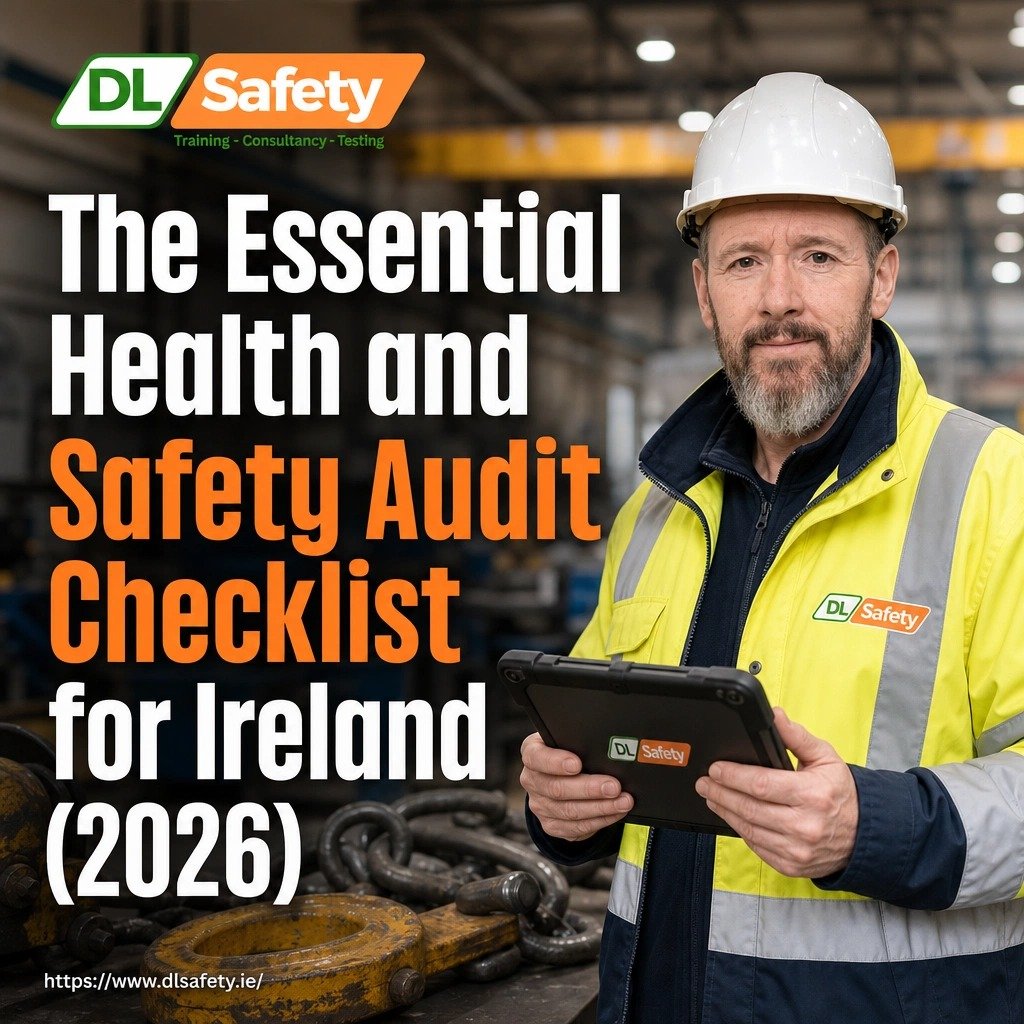
Did you know that the Health and Safety Authority can impose fines exceeding €50,000 for non-compliance with Irish safety regulations? It’s a sobering figure that explains why having a robust health and safety audit checklist Ireland businesses can trust is no longer optional. We understand that as a site manager, you likely feel the weight of shifting rules, such as the 9 April 2026 updates to chemical agent regulations, whilst trying to keep your daily operations moving. It’s frustrating to wade through hundred-page government documents when you just want to ensure your team gets home safely and your site remains legally sound.
You shouldn’t have to decode complex legal jargon to stay compliant. This guide provides a practical, comprehensive framework that distils technical requirements, like GA1 lifting intervals and PAT testing standards, into a clear 10-point checklist. By following these steps, you’ll gain the confidence to navigate HSA inspections and protect your business from legal risk. For dedicated support, contact DL Safety at Unit 3D Thurles Business Centre, Stradavoher, Thurles, County Tipperary, E41 W880, call 085 8316885, or email info@dlsafety.ie. You can also visit www.dlsafety.ie to learn more about our monthly safety support packages and site audit services.
Key Takeaways
- Master the core components of a health and safety audit checklist Ireland site managers use to ensure legal compliance and workplace safety.
- Learn how to integrate vital technical inspections, including GA1 testing and PAT testing, into your routine to maintain high standards for all lifting and electrical equipment.
- Discover a streamlined 10-point framework for reviewing safety statements and physical site conditions whilst avoiding the confusion of dense regulatory documents.
- Understand the process of categorising audit findings by risk level so you can prioritise critical repairs and assign clear deadlines for corrective actions.
- Explore the benefits of professional health and safety site audits to help identify operational blind spots that internal assessments often overlook.
Understanding Health and Safety Audit Requirements in Ireland
A health and safety audit in Ireland is far more than a cursory glance at the factory floor or a quick check of the fire extinguishers. It’s a methodical, deep-dive examination of your entire safety management system to ensure that your stated policies align with your actual workplace practices. Whilst a standard site inspection might provide a snapshot of physical hazards on a given day, a comprehensive audit evaluates the effectiveness of your safety culture, documentation, and long-term compliance strategies. By adhering to core Occupational safety and health principles, businesses can transform safety from a legal burden into a genuine competitive advantage. A robust safety programme doesn’t just keep people safe; it actively reduces insurance premiums and prevents the costly operational downtime that follows a workplace accident or a Prohibition Notice from the HSA.
The Legal Framework: SHWW Act 2005
The foundation of Irish safety law is the Safety, Health and Welfare at Work Act 2005. Under Sections 19 and 20, every employer must identify hazards, carry out risk assessments, and maintain a written Safety Statement. Your health and safety audit checklist Ireland should always begin with this document. It isn’t just a folder on a shelf; it’s a living contract between you and your employees. Directors and company owners should be aware that non-compliance carries heavy weight. The HSA has the authority to impose fines exceeding €50,000 for serious breaches, and in cases of gross negligence, individual managers can face personal legal liability and even imprisonment. Ensuring your Safety Statement is up to date is the first step in protecting both your workers and your professional reputation.
Frequency and Timing: When to Organise an Audit
Determining how often to audit depends on the inherent risks of your industry. High-risk environments like construction sites or quarries require more frequent, intensive reviews compared to a standard office setting. However, certain “trigger events” necessitate an immediate safety review regardless of your schedule. These include the introduction of new machinery, a significant change in work processes, or the implementation of new legislation, such as the chemical safety regulations that came into effect on 9 April 2026. Many proactive businesses choose to integrate these reviews into their Monthly Safety Support Packages to ensure nothing slips through the cracks. If you’re unsure where your site stands, contact DL Safety at Unit 3D Thurles Business Centre, Stradavoher, Thurles, County Tipperary, E41 W880, or call 085 8316885 to discuss a professional health and safety site audit. You can also reach us at info@dlsafety.ie or visit www.dlsafety.ie for expert guidance on maintaining a compliant workplace.
The 10-Point Health and Safety Audit Checklist Ireland
Whilst many available resources focus heavily on clinical or healthcare settings, a practical health and safety audit checklist Ireland industrial and commercial leaders can actually use must account for the specific hazards of workshops, warehouses, and construction sites. An effective audit isn’t a “tick-box” exercise to satisfy a bureaucrat; it’s a rigorous examination of your operational reality. To ensure your site remains compliant and your workers stay protected, your audit should cover these ten essential pillars: Safety Statement validity, Risk Assessment currency, Training Record accuracy, Housekeeping standards, Lighting levels, Welfare facility adequacy, Fire safety readiness, First Aid provision, Electrical safety, and PPE suitability. If you find gaps during this process, scheduling a professional site audit can help you address them before they become liabilities.
Critical Safety Documentation
The Health and Safety Authority (HSA) expects to see “live” documentation that reflects the work actually happening on the ground. Your Risk Assessments shouldn’t be static files gathering dust; they must be reviewed whenever a process changes or a near-miss occurs. Similarly, Method Statements for high-risk activities must be clear, site-specific, and communicated to the relevant team members. Don’t overlook the Accident Book either. It serves as a vital diagnostic tool that helps you identify recurring patterns of injury or equipment failure, allowing you to intervene before a major incident occurs. Keeping these records organised at Unit 3D Thurles Business Center, Stradavoher, Thurles, County Tipperary, E41 W880, or your local site office is fundamental to your legal defence.
On-Site Physical Hazards
Physical site conditions can deteriorate quickly without constant oversight. Slips, trips, and falls remain the most common cause of workplace injury in Ireland, so your audit must scrutinise floor conditions, trailing cables, and spill response protocols. Electrical safety is another critical area. For tools in active use on construction sites, the HSA recommends PAT testing every three months to ensure equipment integrity. Furthermore, your audit must address chemical safety in light of the 9 April 2026 updates to the Chemical Agents Regulations. Ensure all substances are stored correctly and that COSHH assessments are updated to reflect the latest occupational exposure limit values. For assistance with technical testing or documentation, you can reach the team at 085 8316885 or info@dlsafety.ie. Visit www.dlsafety.ie for more information on how we support businesses with comprehensive compliance solutions.
Technical Inspections: GA1, PAT, and Brake Testing
Technical testing serves as the physical proof of your compliance programme. Whilst your documentation outlines how you intend to keep people safe, technical inspections confirm that your machinery and tools aren’t on the verge of failure. Integrating these specialised checks into your health and safety audit checklist Ireland ensures that you aren’t just meeting the letter of the law but are actively preventing catastrophic equipment failure. Whether it’s a worn lifting chain or a faulty drill, these items represent silent risks that only a methodical testing regime can uncover. Relying on guesswork is a gamble that no site manager can afford to take.
Lifting Equipment and GA1 Certification
Managing the lifecycle of lifting equipment requires a disciplined approach to the “Report of Thorough Examination,” commonly known as the GA1 form. Under the 2007 General Application Regulations, you must ensure that all lifting accessories, such as slings, chains, and shackles, are inspected every 6 months. Heavier plant, like telehandlers or cranes, typically requires a 12-month inspection cycle. Integrating GA1 testing Ireland into your audit helps you spot critical signs of wear, such as hairline fractures, stretching, or nicks in lifting slings, that lead to immediate failure. Don’t wait for an HSA inspector to find an out-of-date certificate; proactive management of these assets is essential for business continuity and worker safety.
Industrial Vehicle and Plant Safety
Industrial vehicle and plant safety require more than just a quick look at the tyres. On-site quarry vehicle brake testing is a vital component of a robust health and safety audit checklist Ireland, especially given the move towards stricter enforcement of vehicle safety standards under realistic load conditions. Your checklist should also include a review of daily inspection logs for excavators and dumpers to verify that operators are actually performing their pre-shift checks. Beyond the machines themselves, ensure that your site-specific traffic management designs and lift plans are being followed to the letter. This level of detail at Unit 3D Thurles Business Center, Stradavoher, Thurles, County Tipperary, E41 W880, or any active site, prevents the collisions and rollovers that account for a high percentage of industrial fatalities. For construction operations specifically, integrating these checks within a broader construction safety management plan Ireland site managers can rely on will ensure vehicle and plant safety is embedded at every stage of the project lifecycle.
Portable Appliance Testing (PAT) completes the technical picture. Although legislation doesn’t name “PAT” specifically, the HSA advocates a risk-based approach to electrical safety. For tools in constant use on site, a three-monthly testing interval is the gold standard. If you need assistance organising these technical requirements, contact DL Safety at 085 8316885 or info@dlsafety.ie. You can also explore our full range of services at www.dlsafety.ie to see how we can streamline your compliance journey and help you maintain a safe, efficient workplace.

Turning Audit Findings into Corrective Action
An audit is only as effective as the actions you take once the inspection is finished. If your health and safety audit checklist Ireland reveals gaps in your compliance, it’s vital to move from observation to resolution without delay. We recommend categorising every finding into three clear risk levels: Critical, Major, and Minor. This clarity ensures that your resources are focused where they’re needed most. A “Critical” finding, such as a missing guard on a dangerous machine, requires work to stop immediately until the hazard is fixed. “Major” findings might involve systemic issues like outdated training records, whilst “Minor” points often cover low-risk housekeeping improvements. Once the list is finalised, a “Close-Out” meeting with your workforce is essential. It turns the audit from a management exercise into a shared commitment to a safer site culture.
Prioritising Safety Improvements
Addressing immediate danger is your first priority. If a piece of equipment fails a technical inspection, it must be locked out until repaired or replaced. For broader systemic improvements, we suggest developing a 30-60-90 day plan. This structured approach allows you to organise budget allocations for new lifting shackles or online safety courses without overwhelming your operational flow. It’s about making steady, documented progress that demonstrates your commitment to your Duty of Care. If you’re struggling to prioritise these tasks, our team at Unit 3D Thurles Business Center, Stradavoher, Thurles, County Tipperary, E41 W880, can help you build a roadmap that makes sense for your specific industry.
Monitoring and Re-Auditing
Verification is the final step in closing the loop. Your site safety officer should physically check that every corrective action has been completed according to the agreed deadline. Simply ticking a box in an office isn’t enough; you need to see the improvement in action. Many of our clients find that linking these results to a monthly safety support Ireland package provides the consistency needed to prevent old, dangerous habits from creeping back in. Scheduling a follow-up audit six months later confirms that your new controls are holding firm. To get started on a more proactive path, book a professional health and safety site audit with us today. You can reach us at 085 8316885, email info@dlsafety.ie, or visit www.dlsafety.ie for expert support.
Professional Support: Why Expertise Matters in Auditing
Managing a busy site requires immense focus on production and deadlines. In this environment, self-assessment has its limits. When you walk the same warehouse floor or quarry every morning, you naturally become accustomed to your surroundings. This familiarity can lead to “blind spots” where small hazards go unnoticed until they cause an incident. A health and safety audit checklist Ireland provides a vital roadmap, yet its effectiveness depends on the objectivity of the person holding it. Fresh eyes bring an unbiased perspective and a wealth of cross-industry knowledge that internal teams simply cannot replicate.
Engaging a trusted advisor allows you to move beyond basic compliance. External experts identify the subtle gaps in your safety culture that could lead to HSA fines or legal action. It’s about building a narrative of trust and thoroughness. By choosing a partner who understands the nuances of Irish legislation, you gain the confidence that your site is truly protected. This proactive problem-solving approach turns a complex regulatory burden into a streamlined, manageable part of your business strategy.
Comprehensive Safety Management with DL Safety
DL Safety projects the persona of a personable expert, dedicated to your long-term success. We don’t just provide a list of faults; we offer a solution-oriented partnership. Our health and safety site audits are thorough and methodical, designed to demystify complex requirements whilst maintaining high standards. We offer a comprehensive suite of services that includes accident investigation and technical testing, such as GA1 and PAT, all within one cohesive framework. Additionally, our simulation training is an innovative tool that builds competency amongst your workforce, ensuring they don’t just follow rules but understand the “why” behind them. This disciplined commitment to excellence is what sets us apart as innovators in the field.
Contact DL Safety Today
If you’re ready to secure your site and protect your people, David and the team are here to help. We combine rigorous technical proficiency with a friendly, approachable demeanour that makes compliance easy to manage. You can reach us via email at info@dlsafety.ie or call us directly on 085 8316885 to discuss your specific needs. Our office is located at Unit 3D Thurles Business Centre, Stradavoher, Thurles, County Tipperary, E41 W880. To explore our full range of services and learn how we can support your business, visit www.dlsafety.ie today. Let us help you take the stress out of safety management with a practical health and safety audit checklist Ireland can rely on.
Building a Culture of Continuous Compliance
Maintaining a safe workplace requires consistent effort and a clear roadmap. By now, you understand that a health and safety audit checklist Ireland managers use effectively must combine rigorous documentation with technical precision. Compliance doesn’t have to be complicated. Whether managing GA1 lifting intervals or implementing corrective action plans, the goal remains protecting your workforce whilst ensuring business continuity. Safety isn’t just about meeting legal obligations; it’s about fostering a culture where every team member feels secure and equipment is verified to the highest standard.
As a fully insured Irish consultancy, DL Safety provides the pragmatic, industry-focused advice you need to bridge the gap between complex regulations and daily operations. We specialise in expert GA1 and technical testing, helping you identify the blind spots that often lead to accidents. If you’re ready to move from uncertainty to total confidence, Book Your Professional Site Safety Audit with DL Safety today. You can reach David and the team at Unit 3D Thurles Business Centre, Stradavoher, Thurles, County Tipperary, E41 W880, call 085 8316885, or email info@dlsafety.ie. We look forward to helping you build a safer, more efficient future for your business.
Frequently Asked Questions
Is a health and safety audit a legal requirement in Ireland?
Yes, whilst the specific term “audit” isn’t always used in every line of legislation, the Safety, Health and Welfare at Work Act 2005 mandates that employers manage and conduct work activities safely. Auditing is the industry-standard method for verifying that your Safety Statement and Risk Assessments are actually working in practice. It provides the documented proof required to show you are meeting your legal Duty of Care.
How often should a construction site safety audit be conducted?
High-risk environments like construction sites should be audited regularly, often on a monthly or quarterly basis depending on the project’s complexity. The frequency should always reflect the pace of change on your site. Many managers integrate these reviews into Monthly Safety Support Packages to ensure that new hazards are identified as the build evolves, rather than waiting for an annual review. Pairing these audits with a robust construction safety management plan Ireland contractors can implement daily will provide the strongest possible foundation for ongoing site compliance.
What is the difference between a safety inspection and a safety audit?
A safety inspection is a physical check of the workplace to identify immediate hazards like trailing cables or missing guards. A safety audit is much broader; it examines your entire management system, including documentation, training records, and the effectiveness of your overall policies. Both are essential components of a health and safety audit checklist Ireland businesses use to maintain total compliance.
Who is qualified to carry out a health and safety audit in Ireland?
Audits must be conducted by a “competent person” who possesses the required training, knowledge, and experience. Whilst internal staff can perform basic checks, an external consultant provides the objectivity needed to find hidden blind spots. This professional expertise is particularly vital for technical areas like GA1 testing or specialised vehicle brake testing where specific proficiency is required.
What happens if a business fails a health and safety audit?
Failing a professional audit is actually an opportunity to fix critical issues before they lead to an accident or an HSA inspection. If the HSA discovers these same failings during an official visit, they can issue Prohibition Notices or impose fines exceeding €50,000. Use your audit findings to build a 30-60-90 day corrective action plan to bring your site back into legal standing.
Does the HSA provide a free audit checklist for small businesses?
The HSA provides basic tools like BeSMART.ie to help small businesses start their safety journey. These are excellent for general guidance but often lack the technical depth needed for industrial or quarry sites. A bespoke health and safety audit checklist Ireland tailored to your specific machinery and traffic management needs offers much stronger protection for complex operations.
What documents should be ready before an auditor arrives on site?
You should have your Safety Statement, site-specific Risk Assessments, and employee training records organised and accessible. Don’t forget technical documentation, such as GA1 certificates for lifting equipment and PAT testing records for electrical tools. Having these files ready at your site office or Unit 3D Thurles Business Center demonstrates a proactive and disciplined approach to safety management.
Can online safety courses count towards my audit compliance?
Yes, online safety courses are a valid way to meet training requirements, provided the content is relevant to the worker’s role and the training is properly documented. Auditors will look for proof of completion and evidence that the training is being applied on the floor. Keeping these records updated is a key part of maintaining a compliant and safe management system.