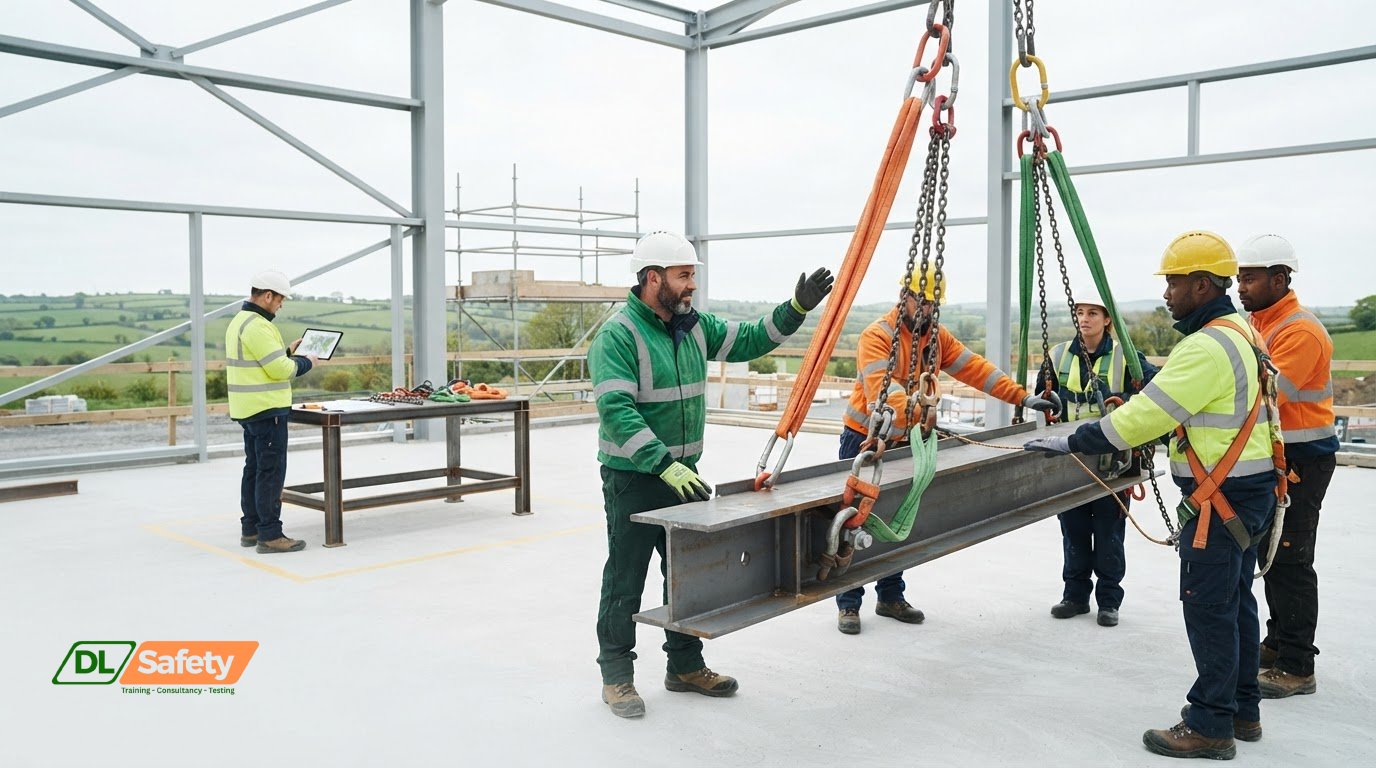
The right lifting gear is chosen from the lift requirements outward, not from a catalogue inward. A page such as liftingequipment.ie may show equipment options, but a sling, chain or shackle only makes sense when matched to the load, lifting points, task and site conditions.
Comparing equipment descriptions with the realities of a construction or industrial job can be difficult. Choosing without a clear plan can also create avoidable disruption. This guide explains what to establish before specifying lifting equipment in Ireland, so you can make a practical, informed choice.
You’ll learn how slings, chains and shackles serve different roles, what information helps narrow down suitable equipment, and why the lift plan matters alongside the gear itself. DL Safety supplies lifting equipment, including slings, chains and shackles, and provides lift plans to connect equipment decisions with the requirements of the job.
Key Takeaways
- Start with the load, lift arrangement, site conditions and task before choosing equipment.
- Compare slings, chains and shackles by their role in the lifting arrangement. They can work together rather than serve as direct substitutes.
- Consider the working load limit in the context of the complete arrangement, and review relevant product documentation and manufacturer information before ordering.
- When comparing options on liftingequipment.ie, consider how the gear fits the planned lift and site, not just its equipment category.
- DL Safety supplies lifting slings, chains and shackles and provides lift plans to connect equipment decisions with the practical requirements of the job.
What does lifting equipment need to do for your job?
Lifting equipment is used to connect, support or move a load during a lifting operation. The term can include equipment that provides the lift, such as a crane or hoist, as well as accessories such as slings and shackles that connect the load to it. For a general overview of different types, see this guide to lifting equipment.
For a buyer, the practical question is what the equipment needs to do in the planned lift. The load, how it will be attached, the route it will travel, the site environment and the lifting method all affect what is suitable. A product listing on liftingequipment.ie is a starting point. The details of the task make the choice meaningful.
Start with the lift, not the product category
Before comparing equipment, record what is being lifted, where it starts and where it needs to go. Note how the load can be connected, whether anything could obstruct its route, and what the surrounding work area is like. This describes the actual job more usefully than a broad label such as “lifting a machine”.
The route matters if the load must pass through a confined area, clear nearby structures or be positioned precisely. The planned method also affects how the load will be supported and controlled. A one-off move may have different planning considerations from a task repeated as part of a regular work process.
Write down the information you know and identify what still needs to be established. A clear task brief gives equipment selection and lift planning a practical starting point.
Which lifting accessories are commonly compared?
Slings connect a load to lifting equipment, chains can form part of the connection or support arrangement, and shackles provide a joining point between components. Their roles are related, but they are not interchangeable by default. Selection depends on the load and complete configuration, not on an accessory viewed in isolation.
- Slings: Consider how the sling will connect to and support the load.
- Chains: Establish how the chain fits into the planned connection and lifting arrangement.
- Shackles: Identify where a joining point is needed and which components it will connect.
A single lift may use more than one accessory category, with each component serving a distinct purpose. Consider how the components work together and with the equipment providing the lift. A clear lift plan helps make comparisons specific to the task and site.
How do load, configuration and site conditions shape equipment choice?
Equipment selection should follow a clear brief for the lift. Suitability depends on the whole configuration, including the load, connection points, lifting equipment, route and site conditions. Choosing an accessory by category alone can miss important details.
Work through these points before comparing options:
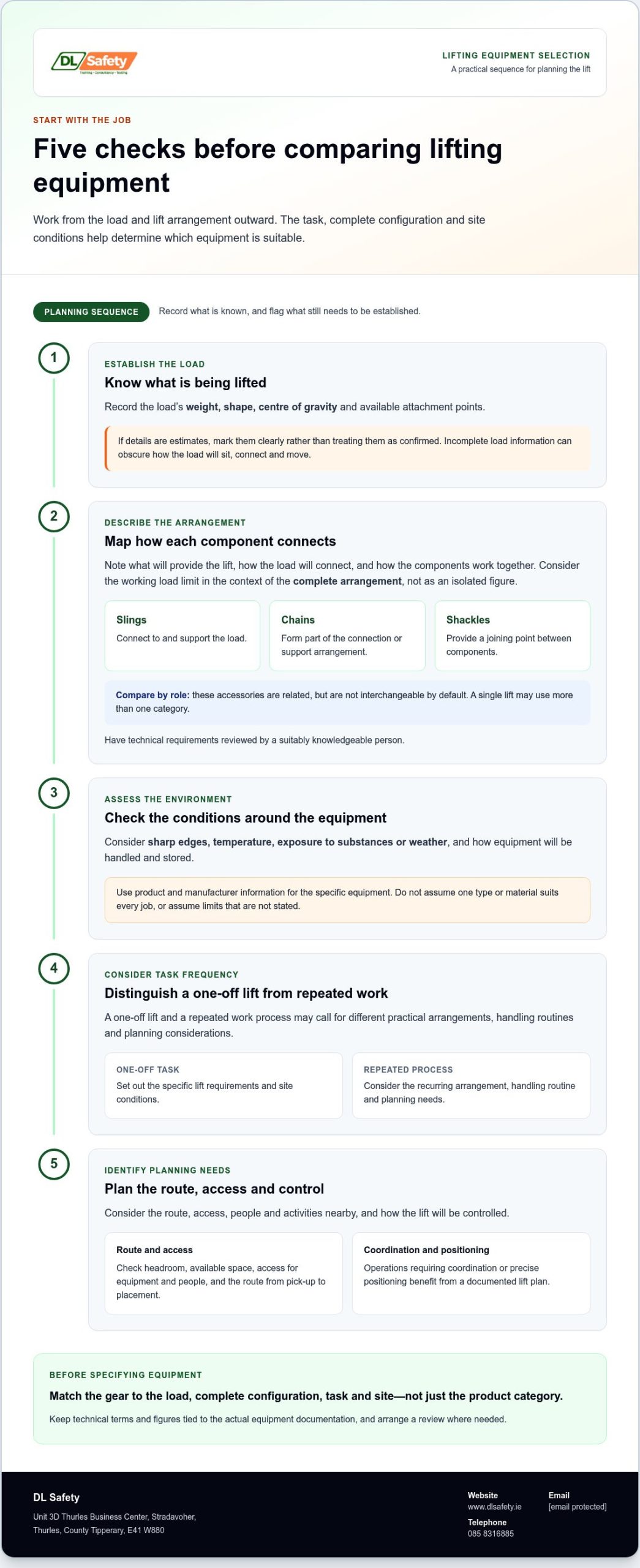
- Establish the load. Record its weight, shape, centre of gravity and available attachment points. If details are estimates, mark them clearly rather than treating them as confirmed.
- Describe the arrangement. Note what will provide the lift, how the load will connect, and how the components will work together. Consider the working load limit in the context of the complete arrangement, not as an isolated figure. Have technical requirements reviewed by a suitably knowledgeable person.
- Assess the environment. Consider sharp edges, temperature, exposure to substances or weather, and how equipment will be handled and stored. Use product and manufacturer information for the specific equipment rather than assuming one type or material suits every job.
- Consider how often the task happens. A one-off lift and a repeated work process may have different practical arrangements, handling routines and planning considerations.
- Identify planning needs. Consider the route, access, people and activities nearby, and how the lift will be controlled. Operations requiring coordination or precise positioning benefit from a documented lift plan.
What load and lift details should buyers assemble?
Bring together the load’s weight, shape, centre of gravity and available attachment points, along with the planned connection and lifting method. Note any uncertainty. Incomplete load information makes it harder to match equipment because it can obscure how the load will sit, connect and move. Keep technical terms and figures tied to the actual equipment documentation, and arrange a review where needed.
How can site conditions change the choice?
Check available headroom, access for equipment and people, the space needed to handle the load, and the full route from pick-up to placement. Record relevant environmental conditions, such as exposure, temperature and possible contact with sharp edges. Use the manufacturer’s information rather than assuming limits that are not stated.
For context, the UK Health and Safety Executive explains planning and control under Lifting Operations and Lifting Equipment Regulations (LOLER). This is UK guidance, not a statement of Irish requirements. In Ireland, DL Safety’s lift planning support connects equipment choices with the practical demands of the operation.
Slings, chains and shackles: how should buyers compare lifting equipment?
Slings, chains and shackles have different roles in a lifting arrangement. Comparing them as if they were direct substitutes can lead to the wrong question. First identify what each component needs to do, how it connects to the load or lifting equipment, and how the complete arrangement will work during the lift.
Use this comparison to organise the decision. The selection inputs are prompts for gathering information, not a substitute for checking equipment documentation or reviewing the proposed arrangement.
| Accessory | General role | Selection inputs | Questions to resolve |
|---|---|---|---|
| Sling | Connects the load to the equipment providing the lift. | Load shape, contact surfaces, attachment points and intended configuration. | How will it support and connect to the load? Could the contact surface or route affect its use? |
| Chain | Forms part of a lifting or connection arrangement. | Its position in the arrangement, how it connects with other components, and the lift requirements. | What role does the chain perform, and how does its use fit the manufacturer’s information? |
| Shackle | Provides a joining point between compatible components in the arrangement. | Which parts it connects, their configuration and how the connection will be used. | Is it appropriate for the connection and the full arrangement described for the lift? |
When might a sling be considered?
A sling may be used when the load needs to be connected to the lifting equipment. Its suitability depends on the load and lift, including the load’s shape, the surfaces the sling will contact and the available attachment points. These details help define what the sling needs to do, but do not establish a suitable type or material on their own. Compare the proposed use with the manufacturer’s information and have technical requirements reviewed by a competent person.
How do chains and shackles fit into the arrangement?
A chain may form part of the connection or support arrangement, while a shackle joins components where a connection point is needed. Either may be used alongside a sling, depending on the planned configuration. Consider how the components interact rather than selecting each item separately and assuming they will work together.
When comparing equipment through liftingequipment.ie, keep the task and complete configuration at the centre of the decision. Check technical limits and inspection criteria against the relevant product documentation and manufacturer information, with competent review where needed. DL Safety supplies lifting slings, chains and shackles to support equipment choices grounded in the requirements of the lift.
What should a buyer clarify before ordering lifting equipment?
A clear equipment brief connects product selection with the job it needs to support. Before ordering through liftingequipment.ie or elsewhere, gather the task details and note any gaps instead of relying on assumptions. Price alone cannot show whether equipment suits the load, configuration or working environment. Compare proposed equipment with the task and the relevant manufacturer information.
What information belongs in a clear equipment brief?
A useful brief describes the lift in practical terms. Include:
- Task: What needs to be lifted, where from, and where it must be placed.
- Load details: Known weight, shape, centre of gravity and available attachment points. Clearly mark estimates or unknowns.
- Lifting arrangement: The equipment providing the lift, the accessories involved, and how components will connect.
- Operating environment: Access, headroom, handling space, route and relevant site or environmental conditions.
- Expected use: Whether the lift is a one-off task or part of a repeated work process.
A useful equipment recommendation starts with a defined task, reliable load details, the intended configuration, site conditions and expected use. Flag uncertain information so it can be addressed during equipment selection and lift planning.
What documentation should buyers review?
Review the product identification and manufacturer information, including instructions for use and limitations relevant to the proposed task. Check that the details correspond to the actual equipment and intended configuration. Documentation for one item does not automatically confirm the suitability of the complete arrangement.
Where examination records are relevant to your purchasing or equipment-management process, keep equipment details clear so the records can be matched correctly. GA1 testing and examination documentation are topics buyers may need to understand. A document or label is not a substitute for checking the equipment’s condition and intended use. Verify technical or regulatory wording against current Irish guidance before relying on it.
When should equipment selection connect with lift planning?
Include selection in the lift plan when the operation involves several connected components, restricted access, a challenging route, precise placement or coordination with other work. Planning helps the team consider equipment as part of the method, rather than as a last-minute purchase. For examination context, check technical criteria against relevant documentation and have them reviewed by a competent person.
DL Safety supplies lifting equipment and provides lift plans for construction and industrial work. Discuss lifting equipment and lift planning to connect the equipment brief with the practical needs of the operation.
How DL Safety connects lifting equipment supply with lift planning
Equipment decisions are more straightforward when they start with the job they need to support. DL Safety is an Ireland-wide health and safety consultancy serving the construction and industrial sectors. It supplies lifting slings, chains and shackles, and provides lift plans to bring equipment requirements and the planned lifting method into the same practical conversation.
Equipment is part of an arrangement, not a standalone answer. Details such as the load, connection points, route and site conditions help shape both the equipment brief and the planning considerations. Sharing what is known and being clear about uncertainties gives the discussion a useful starting point.
What support can DL Safety provide?
DL Safety supplies lifting slings, lifting chains and lifting shackles. Each has a role within a lifting arrangement, and task information helps frame how those components may fit the job. Product details and manufacturer information remain important when considering the suitability of specific equipment.
A lift plan considers the operation in its practical context. It can bring the method, equipment arrangement and site conditions together, linking decisions to the work rather than treating them in isolation. Equipment supply and lift planning are connected parts of preparing for a lift. Neither is a guarantee of compliance or a substitute for appropriate technical review.
What are the next steps for a buyer?
Gather the key facts about the load and task, including the intended lifting arrangement, where the load will travel, relevant site conditions and whether the work is repeated or a one-off. Flag any unknown details. A clear brief helps focus the conversation on the actual lifting requirements.
Whether you’re comparing options on liftingequipment.ie or preparing for an upcoming operation, DL Safety can discuss lifting equipment supply and lift-planning needs for your work. Discuss lifting equipment and lift planning with DL Safety.
DL Safety
Website: www.dlsafety.ie
Email: info@dlsafety.ie
Telephone: 085 8316885
Make your next lifting equipment decision with confidence
Choose lifting equipment based on the requirements of the lift, not just the product category. Load details, the complete arrangement, site conditions and intended use all help shape a practical choice. Slings, chains and shackles have distinct roles, and the right combination depends on how the whole setup will work.
Whether you’re comparing options on liftingequipment.ie or preparing for a planned operation, connecting equipment supply with lift planning can bring the practical details together. DL Safety supports construction and industrial work across Ireland, supplying lifting slings, chains and shackles alongside lift plans.
Start with what you know about the load, task and site, and identify any uncertainties that need attention. Then discuss lifting equipment and lift-planning support with DL Safety. For support, visit www.dlsafety.ie, email info@dlsafety.ie or call 085 8316885.
Frequently Asked Questions
How do I choose the right lifting equipment for a job?
Start with the lift, then match the equipment to its requirements. Record the load’s weight, shape, centre of gravity and attachment points, along with the route, site conditions and planned method. Consider how accessories connect with the equipment providing the lift, and review the manufacturer’s information for the proposed arrangement. If key details are uncertain or the task is complex, include them in lift planning before settling on equipment.
What is the difference between lifting slings, chains and shackles?
Slings connect a load to the equipment providing the lift. Chains can form part of the lifting or connection arrangement, while shackles provide a joining point between components. Their roles may overlap within one lift, but they are not automatically interchangeable. Consider how each item will be used, what it connects to and how it fits the complete arrangement. Product documentation and manufacturer information help clarify suitability for the intended task.
Can I use the same lifting equipment for different loads?
Possibly, but do not assume equipment suitable for one load will suit another. Loads can differ in weight, shape, centre of gravity, attachment points and contact surfaces. The site and lifting arrangement may also change. Check the equipment’s identification and manufacturer information against each intended use, and consider its condition and relevant examination records. If the new task changes the configuration or method, include that difference in the planning review.
What does working load limit mean on lifting equipment?
Working load limit is the stated limit associated with the equipment’s intended use, as set out in its product information. It is not, by itself, an answer to whether an arrangement is suitable. The load, configuration and interaction of connected components all matter. Read the relevant manufacturer documentation and consider the complete lifting arrangement. For technical interpretation, seek a competent review rather than assuming one marked value covers every setup.
When should a lift plan be considered before buying lifting equipment?
Consider a lift plan before buying when the operation involves several connected components, restricted access, a challenging route, precise placement or coordination with other work. Planning brings the lifting method, equipment arrangement and site conditions together before a purchase decision. It is also useful to flag uncertainties early, so they can be addressed while defining the task rather than left until the equipment is needed.
What information should I provide when requesting lifting equipment?
Provide the task, known load weight, shape, centre of gravity and available attachment points. Describe the planned arrangement, including how the load will connect to the lifting equipment, and note the route, access, headroom and relevant environmental conditions. Explain whether the lift is a one-off or repeated task. Mark estimates and unknowns clearly. This brief helps connect your requirements with equipment and lift-planning discussions, including when comparing options on liftingequipment.ie.
Does DL Safety supply lifting equipment as well as lift plans?
Yes. DL Safety supplies lifting equipment, including lifting slings, chains and shackles, and provides lift plans. Sharing details about the load, task, site and proposed configuration helps relate equipment requirements to the planned work. DL Safety serves customers nationally across Ireland and supports the construction and industrial sectors. This combined supply and planning support helps buyers consider equipment alongside the demands of the lift.