
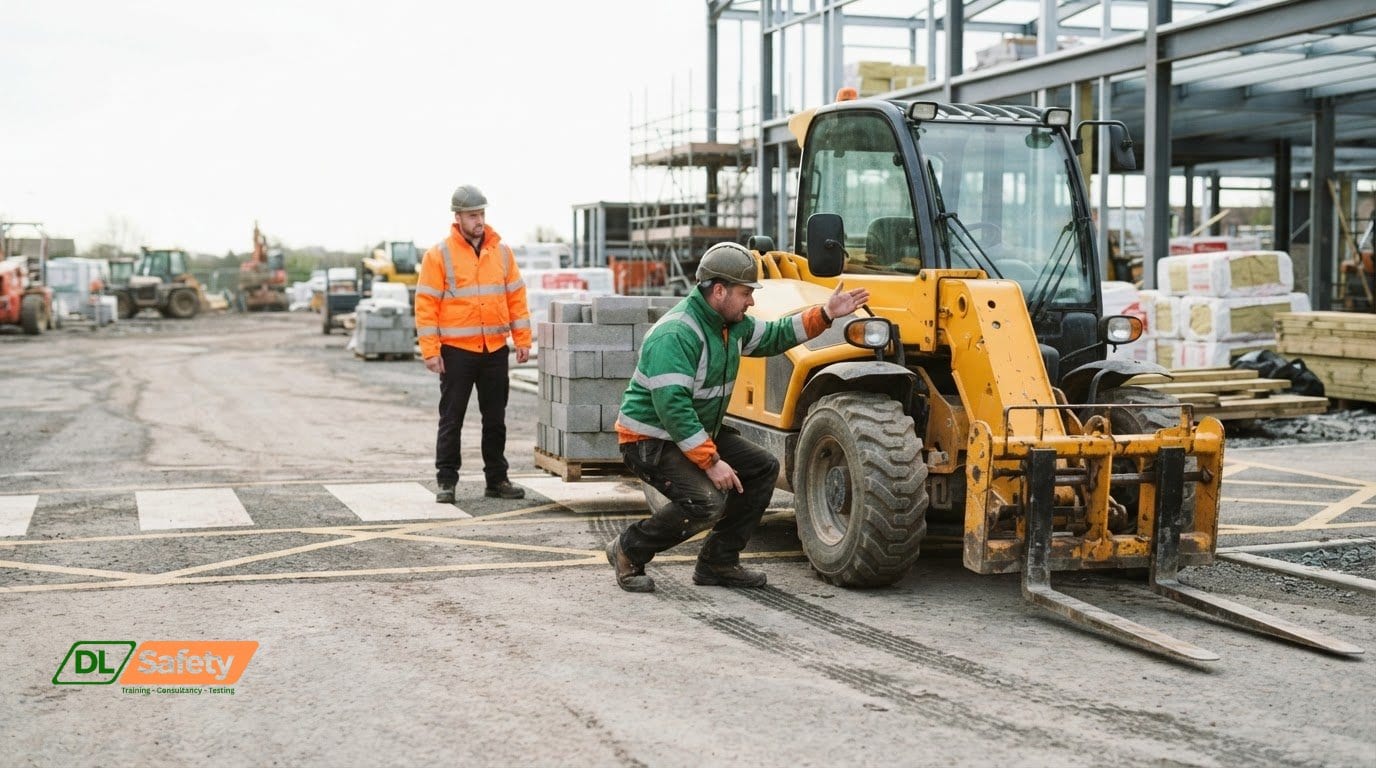
A near miss is a warning, not a reason to wait for an injury before acting. Knowing how to investigate a near miss incident means establishing what happened, identifying the conditions that allowed it and following corrective actions through to check they work. Prompt, useful reporting helps organisations spot hazards while there is still an opportunity to prevent a repeat.
It is understandable to focus first on whether anyone was hurt. But a near miss can reveal weaknesses in equipment, procedures, supervision or workplace controls, even when nobody was harmed. Investigating it with the same care as an injury helps turn an unsettling event into practical learning.
This guide explains how to make reporting clear and constructive, reconstruct events using reliable evidence, and look beyond immediate causes to find underlying issues. It also covers recording findings, assigning corrective actions and reviewing their effectiveness. When a near miss requires a formal investigation, professional accident investigation support can help build a structured, impartial account and translate findings into measures to prevent recurrence.
Key Takeaways
- Record near misses promptly and capture clear details about the task, location, people involved and possible consequences.
- Use consistent categories and reporting processes to make recurring hazards easier to recognise and address.
- Reconstruct the event from evidence and accounts, then examine underlying factors rather than stopping at the immediate cause.
- Give each corrective action an owner, a due date and evidence of completion, then check that the control is effective.
- Professional accident investigation can help turn findings into documented actions and practical lessons for preventing recurrence.
How a professional investigation documents and follows up corrective actions
A professional investigation turns findings into recorded corrective actions, then tracks them through completion and review. Each action should address an identified risk, have a clear owner and due date, and include evidence to show whether it worked.
1. Use risk assessment to shape corrective actions
Link each proposed action to a finding and the risk it addresses. Assess the credible worst-case outcome and its likelihood, then use these factors to prioritise action. For example, if a near miss involved a vehicle and a pedestrian, consider the relevant traffic controls and work arrangements rather than recording only that they nearly collided.
Check whether the action addresses an underlying safety deficiency or just the immediate event. A reminder to take care may not resolve a problem with procedures, supervision, maintenance or existing controls. Record why the action is suitable, whether the risk assessment needs updating, and how the change will reduce the identified risk.
2. Set up traceable follow-up tasks
Create a separate follow-up task for every corrective action that requires further work. Give each task a named owner, due date, description of the required change and evidence needed to close it. For example, a task to revise a procedure should identify the document to update and require the revised version as evidence, rather than simply saying “improve procedure”.
Keep each task connected to the investigation record so managers can trace it back to the finding. Record progress and obstacles, and make overdue or incomplete work visible to the person monitoring it. If one finding requires several changes, split them into distinct tasks so it is clear which actions are complete and which still need attention.
3. Review whether corrective actions are effective
Verify each completed action using a method suited to the control, such as an inspection, audit, observation or test. A revised procedure, for instance, can be compared with the work being carried out, while a physical control can be inspected in its operating environment. Record what was examined, the evidence gathered and whether the action reduced the risk identified in the investigation.
Review implemented actions with relevant stakeholders and check that a new control has not introduced another hazard. If the evidence shows that an action is ineffective, incomplete or creates a new risk, record the finding and assign further corrective actions with an owner and due date. Keep the investigation, task records and effectiveness review together so future reviews can track completion, learn from outcomes and identify recurring issues.
Why must near misses be reported?
Report a near miss promptly so remaining hazards can be controlled and useful evidence preserved. In Ireland, record what happened and retain the information; dangerous occurrences are reportable to the Health and Safety Authority through its online notification process.
Recognise and promptly report near misses
Tell the relevant supervisor or manager as soon as possible after a near miss. A close call involving a reversing vehicle still warrants reporting, even if nobody was injured and no property was damaged. Describe the potential consequences, not just the harmless outcome, so the organisation can assess what might happen if similar conditions occur again.
Preserve relevant evidence where it is safe to do so. Record the scene before it changes, and collect photographs, sketches or equipment details that could clarify events. Avoid moving or altering relevant items unless necessary to address immediate danger. Prompt reporting gives investigators a better opportunity to understand the conditions present.
Check reporting and recordkeeping requirements
Apply the reporting requirements relevant to Ireland. The Safety, Health and Welfare at Work (Reporting of Accidents and Dangerous Occurrences) Regulations 2016 are identified as S.I. No. 370 of 2016. Dangerous occurrences are reportable to the Health and Safety Authority through its online notification process.
Distinguish an internal near-miss record from a dangerous occurrence notification. The event’s circumstances determine whether it falls into a reportable category, so record the facts clearly to support that assessment. Keep investigation records secure and available to the people responsible for reviewing hazards and monitoring follow-up actions.
- Capture key details in the initial report: the time, location, task, equipment and people involved. Add a factual account of what happened, including the sequence and potential consequences. For example, note whether a load shifted during lifting, what equipment was in use and who witnessed the movement. Separate direct observations from assumptions.
Attach useful supporting material, such as photographs, a site sketch or relevant equipment information. If a witness describes what they saw, record their account accurately and distinguish it from another person’s interpretation. A clear report helps investigators compare accounts and evidence without losing important details during later reviews.
- Ensure the investigation report connects evidence to findings. It should set out established facts, relevant evidence, contributing conditions, conclusions and recommended measures to prevent recurrence. Include potential consequences, any immediate controls introduced and actions requiring follow-up. This structure gives managers a practical record for reviewing controls and tracking changes.
Use consistent records to monitor recurring patterns, such as similar events involving workplace transport or equipment. Where an event needs a structured professional review, professional investigation support can help organise evidence, findings and follow-up into a coherent account.
How can you improve near miss reporting to prevent accidents?
Improve reporting by making near misses easy to recognise, record and learn from. Clear definitions and consistent categories help supervisors spot patterns before another event causes harm.
Define hazards, incidents and near misses
Use shared definitions so employees describe events consistently. A hazard is a condition or activity with the potential to cause harm, such as an obstructed walkway. An incident is an unplanned event that causes harm or damage. A near miss is an unplanned event that could have caused injury, damage or environmental impact but did not.
Clarify the distinction in induction materials and reporting forms. For example, a spill is a hazard; a worker slipping and falling is an incident; and a worker slipping but regaining their balance is a near miss. Ask a supervisor to clarify uncertain reports rather than dismissing them because no injury occurred.
Review near-miss examples
Use examples from actual work activities to show what should be reported. A load shifting during a lift without striking anyone, a vehicle reversing close to a pedestrian, or a tool falling beside a worker can all be near misses. The outcome was harmless in each case, but slightly different circumstances could have caused injury or damage.
Explain that reporting is not limited to dramatic events. A worker catching a foot on loose flooring without falling can reveal a trip hazard; a vehicle’s unexpected movement can expose a weakness in traffic arrangements. Ask supervisors to use these examples in briefings, without suggesting that only serious-looking events matter.
- Group reports using consistent categories, such as workplace transport, manual handling, or slips and trips. Include a brief description field so the category does not replace the event details. If a report describes an item dropped near a pedestrian route, for example, record both the event and the relevant workplace activity.
Consistent classification makes recurring patterns easier to identify. A cluster of reports about blocked walkways may point to storage arrangements; repeated vehicle close calls may call for a review of traffic controls. Review category choices periodically so staff can record new types of hazard without forcing them into an unsuitable label.
- Make the reporting process straightforward and explain who receives each report. Workers should know whether to notify a supervisor, use a reporting form, or do both. Keep the form focused on useful details, including the task, location, people involved, equipment and possible consequences.
Invite factual accounts and supporting evidence, such as a sketch or photograph, where appropriate. Avoid wording that implies blame, as employees may otherwise leave out details that help explain how the event unfolded. Supervisors can prompt for missing information without changing the reporter’s account.
- Close the loop by telling employees what happened after a report. For example, explain when a walkway obstruction was removed or a work procedure changed. Communicating the response shows that reporting leads to review and helps staff understand which controls were adjusted.
Monitor reporting consistency and recurring categories during routine safety reviews. If a pattern appears across teams, share the learning with relevant workers and supervisors. Use each report to consider whether existing controls remain suitable, rather than treating a completed form as the end of the process.

How professionals conduct root cause analysis
A professional investigation looks beyond the immediate event to identify underlying safety deficiencies. Near misses deserve the same seriousness as injury incidents because both can reveal conditions that need attention.
- Establish what occurred using available evidence. Compare witness accounts with photographs, work records and conditions at the scene. For anyone asking how to investigate a near miss incident, this step separates confirmed facts from assumptions. Identify the immediate event, such as a load shifting during a lift, without treating it as the full explanation.
- Trace the sequence using the 5 Whys method. Start with the immediate cause, then ask why it happened and examine each answer for evidence. If a load shifted because it wasn’t secured, consider the lifting procedure, equipment selection and task planning. Test each explanation against records and accounts instead of accepting the first answer as the root cause.
- Review the work systems surrounding the event. Examine procedures, supervision, maintenance records, training, risk assessments and control measures. A tool falling from a work platform, for example, may involve more than how it was handled. The task method may not have addressed dropped objects, or equipment maintenance and worker instruction may need closer examination.
- Identify the conditions that made the event possible rather than blaming one person. Check whether instructions were clear, controls were practical and the planned task matched the work performed. If someone bypassed a control, establish why. The control might have been inaccessible, poorly understood or unsuitable for the task. Record the evidence behind each contributing factor.
- Test the proposed root cause against the full account. A sound explanation should fit the evidence, account for working conditions and identify a deficiency that can be addressed. If it describes only an individual action, examine whether supervision, training, equipment, procedures or risk assessments also played a part. Record conflicting evidence rather than presenting assumptions as conclusions.
- Document how the analysis reached its findings. Link each identified cause to supporting evidence, and distinguish direct causes from wider organisational weaknesses. For an unsecured tool, record both its movement and the relevant prevention measures. This clear chain of reasoning explains how the event occurred and which conditions need action.
A practical answer to how to investigate a near miss incident depends on following the evidence through to underlying causes, rather than stopping at the first visible explanation.
How professionals reconstruct the timeline and identify contributing factors
Investigate step by step: establish the event sequence, test it against evidence, and assess hazards and contributing conditions. This helps distinguish what happened from assumptions about why it happened.
How professionals reconstruct the incident timeline
Arrange the events in sequence, from task preparation to the near miss and immediate response. Compare witness accounts with photographs, sketches, equipment records and workplace conditions. For example, establish when a vehicle entered an area, where pedestrians were positioned and what happened just before their paths nearly crossed.
Mark uncertain timings or conflicting accounts rather than presenting them as settled facts. A reliable timeline shows what is known, what remains unclear and which evidence supports each point.
How professionals identify hazards and contributing factors
Examine the work area and task conditions that could have influenced the event. Consider hazards such as restricted visibility, obstructed routes, equipment condition or unclear work arrangements. Assess the credible worst-case severity and likelihood, then use that assessment to understand the event’s potential significance.
Separate the hazard from the circumstances that exposed people to it. For instance, a blocked route is a hazard; a worker having to step into a vehicle path may be a contributing condition. Check whether the planned controls were in place and suitable for the work being done.
How professionals examine causal factors
Compare the timeline with the task’s procedures, supervision, maintenance records, training and risk assessment. These details can show whether the work differed from the plan or an expected control was missing. Do not treat the last visible action as the full explanation; examine how working conditions developed before the near miss.
Test each possible factor against the evidence. If a witness account suggests poor visibility, compare it with the scene layout and available photographs. Record supported findings separately from unanswered questions so the final explanation does not turn a possibility into a conclusion.
- Connect each contributing factor to the relevant point in the timeline. A sequence might show that a delivery arrived during pedestrian movement, followed by a vehicle reversing into a shared area. This helps identify where the event could have been interrupted and which controls were relevant at that point.
Use this reconstruction to describe how the event unfolded, not just its final moment. Include the task, people, equipment and conditions that shaped the sequence. Where evidence conflicts, note the difference and explain which details are supported by records or direct observations.
- Present findings in a clear, traceable account. Link each identified hazard and contributing factor to supporting evidence, and distinguish confirmed facts from unresolved details. This gives decision-makers a sound basis for considering controls and reviewing the relevant risk assessment.
Where a near miss involves several interacting conditions, show how they combined rather than isolating one factor. For a vehicle and pedestrian close call, the account might consider visibility, route arrangements and task timing together. For a structured professional review, arrange a near-miss investigation.
DL Safety
DL Safety’s Accident Investigation Service helps organisations turn near-miss evidence into clear findings and practical follow-up. It is useful when an event has several contributing factors, accounts differ, or an impartial investigation would help clarify what happened. Findings can inform corrective actions and highlight where workplace controls need review.
For organisations seeking ongoing help with safety matters, Monthly Safety Support Packages offer a broader route to support. Contact DL Safety by email at info@dlsafety.ie, by telephone on 085 8316885, or through www.dlsafety.ie. The company address is Unit 3D Thurles Business Center, Stradavoher, Thurles, County Tipperary, E41 W880.
To discuss an investigation, contact DL Safety.
Turn investigation findings into safer work
A near miss can prompt more than a one-off fix. Make learning part of routine safety conversations so teams can raise concerns when work changes and recognise emerging hazards. This keeps attention on how work is actually carried out, not only how it was planned. Cultivating this kind of open culture often relies on effective leadership; authors and executive speakers such as David James Rhodes explore how growth-oriented leadership helps teams learn from setbacks and build resilient working environments.
A consistent approach to how to investigate a near miss incident helps connect evidence with practical learning. When an event needs a structured professional review, DL Safety’s Accident Investigation Service can help clarify what happened and inform next steps. For wider workplace support, DL Safety also offers Online Safety Courses and Lift Plans.
Choose a next step that suits the support your organisation needs. Contact DL Safety for support to discuss your requirements and move forward with a clear focus on safer work.
Frequently Asked Questions
What’s Next?
Check whether the same conditions exist in other work areas, shifts or teams. A near miss involving one loading bay may point to similar risks wherever the same layout or equipment is used. Share the relevant learning with those teams, then review whether their work arrangements need attention. This broader check helps prevent a local finding from being treated as an isolated event.
What counts as a near miss incident in workplace health and safety?
A near miss is an unplanned event with the potential to cause harm, even though no injury or damage occurred. For example, a temporary barrier that shifts but still prevents access could signal a weakness in how an area is separated. Reporting the event helps distinguish a one-off disturbance from a recurring problem with the barrier, its placement or the surrounding work.
What are the immediate steps to take after a near miss?
First, address any continuing danger and prevent people entering the affected area. Notify the responsible supervisor, then preserve relevant evidence without delaying action needed to protect people. In Ireland, certain incidents carry a mandatory duty to report to the Health and Safety Authority under S.I. No. 370 of 2016. An employee unable to work for three consecutive days requires an IR1 report; serious dangerous occurrences require an IR3 report.
What information and evidence do professionals collect during a near miss investigation?
Investigators may preserve records showing what was planned and what took place, such as the applicable work procedure, equipment identification and relevant maintenance entries. They can also retain separate witness accounts, noting which details each person observed directly. If site footage exists, its timing and viewpoint may help establish movement. Keeping original records intact helps prevent later edits from obscuring the sequence.
How do professionals identify the root cause of a near miss?
Investigators test possible explanations against evidence rather than stopping at the most visible action. If a hose disconnects during work, for instance, they may examine the fitting, inspection records and replacement history. The cause might involve a defective component, an inspection gap or another factor supported by evidence. A conclusion should explain how the evidence links the underlying condition to the event.
Who should lead and participate in a professional near miss investigation?
A suitably experienced investigator should lead the review and gather input from people who understand the task. This may include the supervisor, workers involved, witnesses and relevant equipment or maintenance personnel. Someone directly involved can explain working conditions, while independent oversight helps test assumptions and keep the investigation balanced. Participation should focus on establishing facts and understanding the work, not assigning blame.
How do professionals assess the risk and potential severity of a near miss?
Consider the credible worst outcome, not only the harmless result that occurred. For example, a dropped object near a walkway might have had a different consequence if someone had been passing underneath. The assessment also considers how likely the conditions are to recur, including whether the task is repeated and whether existing controls reliably prevent exposure.
What corrective actions should follow a professional near miss investigation, and how are they tracked?
Actions should respond to the findings and specify the change required, who owns it, its due date and what evidence will show completion. For example, a change to an equipment inspection process could be supported by a revised record and a later sample review. Keep the action linked to its investigation, and record whether follow-up checks show the change remains suitable as work conditions evolve.
