
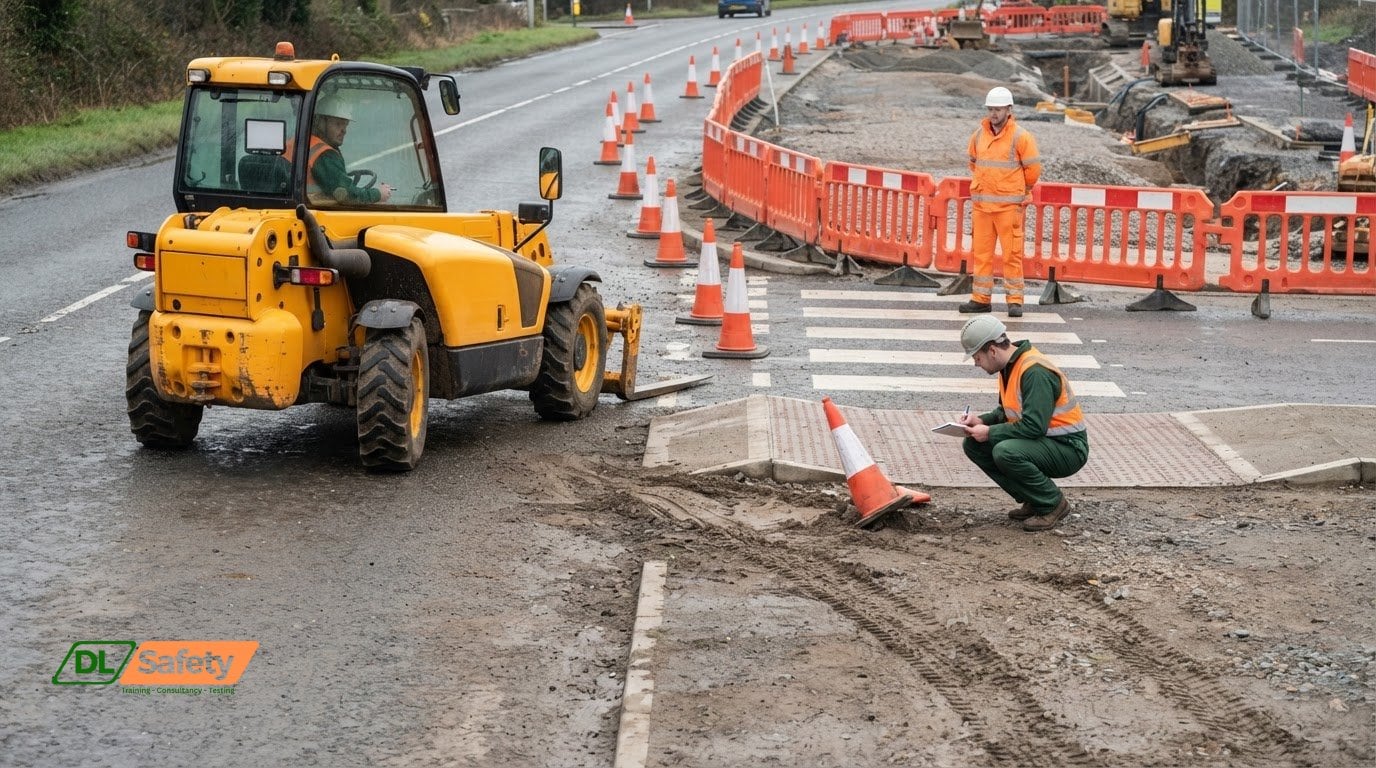
A near miss is a warning, not a non-event. It is an unplanned incident that causes no injury, illness or damage but could have done so in different circumstances. The benefits of a near miss reporting system include making hazards visible while there is still time to address them.
An incident with no immediate harm may seem less urgent to report. Yet a clear, no-blame process can help employees explain what happened, help managers identify recurring risks and support practical changes before a similar event causes harm. Reporting makes a difference when concerns are investigated and lessons lead to action.
This article explains what counts as a near miss, why reporting matters and how reports can help prevent accidents. It also covers what details to include, such as where and when the event happened, its possible consequences and any immediate action taken. The aim is to make reporting straightforward, useful and focused on learning.
Key Takeaways
- Recognise events that could have caused harm, even when nobody was injured and nothing was damaged.
- Make reporting straightforward and blame-aware so employees feel able to share what happened.
- Use reports to spot recurring hazards and weaknesses in safety controls, then act on what the findings reveal.
- Record when and where the event occurred, what happened, its possible consequences and any immediate action taken.
- Share relevant lessons with the workforce so reporting can support safer practices over time.
1. What Is a Near Miss?
A near miss is an unplanned event that causes no injury, illness or damage, but could have done so in different circumstances. For example, a worker might step away just before a falling object strikes the floor. The object causes no harm, yet it reveals a hazard that deserves attention.
Near misses can also involve unsafe conditions or “good catches”. For example, someone spots and secures a loose cable before anyone trips, or a pedestrian moves clear of a reversing vehicle in time. In each case, the report should describe what happened, not blame the person who noticed or experienced it.
Employees often spot hazards first because they work directly with equipment, procedures and changing site conditions. A reporting system should make it easy to describe an event in plain language, including where it happened and what could have gone wrong. Managers can then investigate the circumstances instead of relying on assumptions.
Digital and paper-based systems can both record near misses, but they differ in how reports are collected and reviewed. Digital forms can standardise entries, support mobile reporting and bring information together for trend analysis. Paper forms may be familiar, but manual collation can make records harder to review.
In Irish workplaces, internal reporting helps organisations identify hazards and review controls. A near-miss report is not automatically a statutory notification. Assess the actual event against the applicable reporting criteria, and record it internally so the investigation can inform safer procedures.
A positive reporting culture starts with a clear message: report the hazard, not someone to punish. If a worker reports that a pallet nearly fell because it was stacked unevenly, the investigation should examine the stacking procedure, equipment and working conditions. This encourages useful detail instead of silence or incomplete accounts.
Visible follow-through makes this approach credible. Managers should acknowledge reports, assign an investigator, communicate findings and explain corrective actions. If employees report a blocked walkway but see no response, their confidence in the process may weaken. A brief update confirming that the obstruction was cleared shows that reporting leads to action.
No-blame does not mean ignoring unsafe conduct or avoiding accountability. It means separating learning from automatic fault-finding and examining whether training, supervision, equipment or procedures contributed. A supervisor can thank an employee for reporting a near miss, gather facts without accusation and share relevant lessons with the team. These steps encourage participation and make reporting part of everyday safety practice.
2. Why should you report near misses?
A near miss is an unplanned event that causes no harm but could have caused injury, illness or damage. The key question is what might reasonably have happened if circumstances had been different. For example, a dropped tool landing in an empty work area is still worth reporting, even if nobody was nearby.
Reporting captures warning signs before they fade from memory or the work area changes. If a worker finds a damaged ladder rung before anyone climbs it, the report can record the equipment, location and circumstances. That information helps managers decide whether to remove the ladder, inspect similar equipment or review storage and inspection procedures.
Near misses can happen in any workplace. In a warehouse, a load might shift during handling but stay on the pallet. In an office, someone might avoid slipping on a wet floor just before it is cleaned. In healthcare, a timely intervention might prevent the wrong medicine from reaching a patient. Each example points to a possible weakness, even when nobody is injured.
Reports also help organisations distinguish an isolated event from a recurring hazard. If separate reports describe loads shifting in the same storage area, managers can investigate the layout, equipment and handling process together. Looking for root causes helps address the conditions behind the events instead of treating each report as an isolated mistake.
The absence of injury does not mean the risk was minor. A small change in timing, position or task could turn the same event into a serious incident. A report preserves the details needed to understand that potential, including the work underway and the controls expected to prevent harm.
Near-miss reporting can strengthen safety decisions when managers act on employees’ observations. For example, reports about a confusing handover might prompt a review of who shares equipment status and how that information is recorded. If the investigation identifies a gap in the procedure, revising the handover process can address it before it contributes to a more serious event.
Reports are most useful when they support learning, rather than serving as a target for counting submissions. An increase in reports may reflect greater confidence in speaking up, not worsening safety. Managers should consider the circumstances, recurring patterns and follow-up actions. Employees then have a clear reason to report: their observations can help change a risky task, repair a control or improve a procedure.
NASA defined a near-miss event in 2011 as an anomaly that signals the potential for more severe future consequences from causes discernible at the time of the event. Near misses occur every day in every industry. A robust near miss reporting system can reduce recordable incidents by up to 40 percent.
This gives organisations a practical reason to investigate warning signs and act before they lead to harm.
3. How near-miss reporting may help prevent accidents
Reporting can turn an observed risk into a decision about workplace controls. An incident is an event connected with work; an accident causes injury, illness or damage. A near miss causes none of these, although different circumstances could have changed the outcome. A clear record helps managers choose an appropriate response.
Near misses can provide warning signs, but they do not predict that a specific accident will happen. Most serious, catastrophic and loss-producing incidents are preceded by near-miss warnings. For example, a load shifting during transport may signal that a control is not working consistently. Reviewing the warning gives the organisation an opportunity to examine the task before anyone is harmed.
Frank E. Bird’s research analysed more than 1.7 million accident reports from almost 300 companies. Patterns across reports can reveal shared weaknesses that a single event might not show. Managers can group incidents by location, equipment or contributing factors, then investigate whether the same conditions recur.
Consider a chemical spill contained before anyone is exposed. An investigation could examine storage, labelling, handling procedures and spill controls. The response should reflect the evidence: replacing a damaged container or revising a procedure may address the cause more directly than simply reminding employees to be careful. Near miss reporting system benefits for accident prevention depend on taking action on identified risks.
Reports can also show whether safety controls work during everyday tasks. A risk assessment may require a barrier around a work area, yet reports might show that deliveries repeatedly leave it open. Reviewing access arrangements and the delivery process can reveal the gap between written procedures and actual work. In specialised sectors such as oil and gas, addressing these control gaps might involve engineered solutions like the hot work safety enclosures featured on petrohab.com. Follow-up then helps establish whether a revised control has addressed it.
A practical feedback loop connects reporting with improvement: record the event, investigate contributing factors, choose an action, communicate the change and review its effect. If reports show that a fault continues after an equipment check is changed, managers can reassess the control. The investigation should remain active until the response addresses the conditions behind the event.
Employees are more likely to contribute when they see thoughtful action follow their reports. Managers can explain a change, such as a revised handover, and invite feedback on how it works. A near miss reporting system benefits teams by making patterns visible and turning findings into safer working practices. Report totals alone cannot show whether risk has fallen.

4. Possible unintended effects of near-misses on safety
A near-miss report can improve workplace safety, but only if someone investigates it and responds. A report left unread, or closed without addressing its cause, may leave the original hazard in place. For example, recording a recurring obstruction without changing storage arrangements can allow the same danger to affect another worker.
Near misses are warning events, not predictions that a particular accident will happen. Most serious, catastrophic and loss-producing incidents are preceded by near-miss warnings. A recurring fault in one machine or repeated slips near the same entrance can prompt a closer look at controls before an injury or equipment loss occurs.
Examples vary across industries. In a warehouse, an unstable load may shift without falling; in healthcare, a medicine error may be caught before reaching a patient. On an active construction site, such as those managed by Swiss Build Ltd, a worker might notice an excavation barrier out of place before anyone enters the area. Each event has different possible contributing factors, so an investigation should consider the task and workplace conditions.
Assess effectiveness by looking at what reports reveal and what changes follow, rather than relying on report totals alone. Useful signs include correcting a hazard, improving a procedure or seeing similar events become less frequent after a control changes. A high report count may also reflect a greater willingness to speak up, not worsening conditions.
Underreporting creates blind spots: managers may not learn that a walkway repeatedly floods or that a tool guard is difficult to use. Poor management creates a different risk. If employees receive no feedback after reporting, or see colleagues blamed for raising concerns, they may stop sharing details that could help prevent future incidents.
Follow-up should be consistent. First, make the area safe and preserve relevant details. Then gather accounts from those involved, examine equipment and procedures, and identify contributing causes without assuming fault. Assign a practical corrective action, tell relevant employees what will change, and later check whether the hazard has returned.
Investigations can have unintended effects if managers focus on the person nearest the event instead of the surrounding conditions. Retraining one worker, for example, will not resolve a confusing procedure used by an entire team. A non-punitive root-cause review considers training, supervision, equipment design and work organisation, then selects actions that address the actual weaknesses.
Finally, share relevant lessons without exposing personal details unnecessarily. A toolbox talk about keeping an access route clear can help several teams, while an update on corrective actions shows that reports lead somewhere. This keeps reporting connected to learning instead of turning it into paperwork or a measure of blame.
5. Information to include in a near miss report
A useful report gives managers enough detail to understand the event, assess possible harm and investigate its causes. Record observable facts, not assumptions about fault. For example, describe a trolley stopping suddenly beside a doorway, rather than saying a colleague was careless.
Capture the core details while the event is still clear. A form should prompt employees to report:
- Date and location: note when and where it happened, such as beside the loading bay entrance.
- Incident description: explain the task underway, what occurred and which equipment or materials were involved.
- Potential consequences: describe what could have happened, such as a person being struck or equipment being damaged.
- Immediate actions: record steps already taken, such as isolating equipment or clearing access.
- Suggested corrective actions: note a practical change that could reduce the risk, such as improving a storage arrangement.
Specific details make an investigation more useful. “A trolley stopped suddenly beside the doorway” gives a starting point; “there was a problem” does not. Where relevant, include the equipment’s condition, the procedure being followed and any factors that changed during the task. Keep the account factual and distinguish what the reporter observed from what they think caused it.
An effective reporting system makes the process straightforward, investigates reports, communicates lessons and reviews trends for recurring hazards. Digital forms can standardise information and help managers organise reports by location, equipment or contributing factors. Paper forms can also capture essential details, provided reports are collected, reviewed and followed up consistently.
Useful context includes the controls expected to prevent the event. If a gate was left open, for example, record whether a sign, barrier or handover procedure applied. This helps the investigation assess how the work was organised instead of focusing only on the final moment. Employees should be able to add relevant observations without needing technical language.
After submission, management systems should link each report to an investigation, an action owner and feedback for the reporter. If a change is made, record what changed and review whether the same hazard appears again. Keep unresolved reports visible for follow-up instead of letting them disappear into an unchecked log.
Confidential handling matters too. Limit personal details to what the investigation needs, and share lessons in a way that protects employees from unnecessary blame. A brief team update about a revised access procedure can support workplace safety without naming the person who raised the concern.
The takeaway is simple: record what happened, what harm could have followed, what was done immediately and what could prevent a repeat. These details turn an employee’s observation into information that managers can investigate, act on and use to improve safety procedures.
DL Safety
DL Safety helps organisations turn safety concerns into practical action through its Accident Investigation Service and Monthly Safety Support Packages. These services are useful when a near-miss report raises questions about contributing causes, follow-up or how safety procedures work in practice.
For support with workplace safety, contact DL Safety by calling 085 8316885 or emailing info@dlsafety.ie. The address is Unit 3D Thurles Business Center, Stradavoher, Thurles, County Tipperary, E41 W880. Find the business at www.dlsafety.ie.
Make reporting part of everyday work
A reporting process works best when it becomes a normal part of how a team discusses its work, rather than a form used only after something goes wrong. A practical next step is to agree who reviews reports, how corrective actions are tracked and how lessons are shared. This gives employees a clear route from raising a concern to seeing a considered response.
Understanding the benefits of a near-miss reporting system is only the start. Keeping the process practical helps turn that understanding into consistent workplace action. DL Safety offers Monthly Safety Support Packages, Online Safety Courses and Lift Plans to support different workplace safety needs.
If you’re ready to discuss a clearer approach to reporting and follow-up, contact DL Safety. A thoughtful process can help your team speak up, learn and keep improving.
Frequently Asked Questions
What Is a Near Miss?
A near miss is an unplanned workplace event that causes no injury, illness or damage but could have under different circumstances. For example, a worker may notice a damaged handrail before anyone uses the stairs. Reporting records the risk even though nobody fell. A hazardous condition without an event may still need attention, but describing what happened helps distinguish the two.
Why should you report near misses?
Report a near miss so the organisation can respond to a risk that might otherwise go unnoticed. A report can preserve details about a temporary condition, such as a delivery blocking an emergency exit before the area is cleared. This helps managers consider whether the issue could recur during another shift, delivery or task, and decide whether further action is needed.
What are the main benefits of near-miss reporting in the workplace?
Near-miss reporting records warning signs, helps managers spot recurring problems and supports better-informed decisions about controls. Reports from separate teams might reveal, for example, that a particular handover regularly leaves equipment status unclear. Reviewing that pattern can help management prioritise an improvement and share lessons across teams, rather than treating each report as unrelated.
How does near-miss reporting help prevent accidents and injuries?
Reports can help prevent harm by prompting action before an unsafe condition causes injury. If workers repeatedly report a hose crossing a shared route, management can examine why it keeps happening and change how the hose is routed or secured. Reviewing the area afterwards helps show whether the change works. If the hazard remains, the organisation can reconsider the control.
How can employers encourage workers to report near misses without fear of blame?
Employers can explain that reporting supports learning, make the process easy to use and respond constructively when employees raise concerns. A supervisor might thank a worker for reporting a faulty guard, then explain what action followed. This feedback helps build trust. Investigations should focus on relevant conditions and procedures, while addressing unsafe conduct fairly and consistently.
