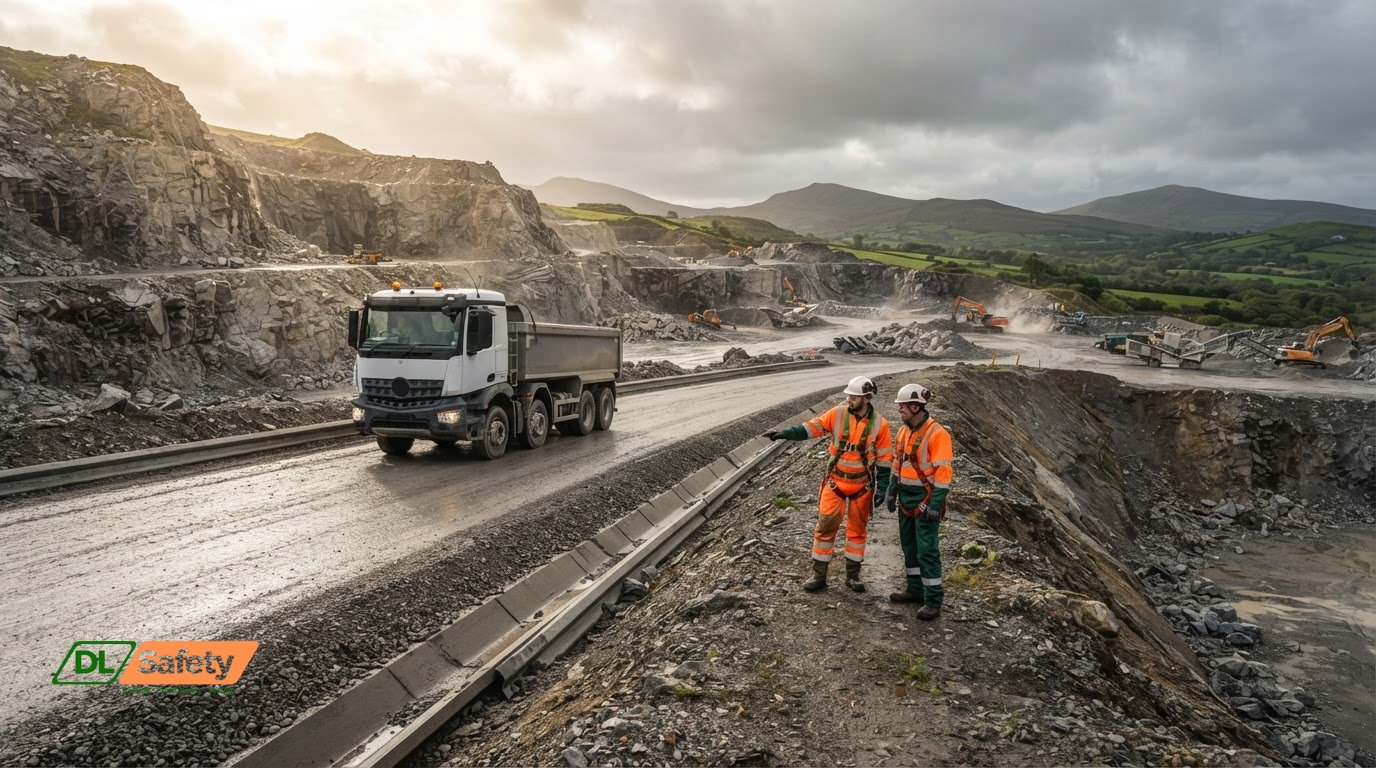
What if a route that was safe at the start of a shift becomes unstable after rain, excavation or a change in material? Preventing vehicle rollovers in quarries means looking beyond the vehicle itself: ground conditions, gradients, route layout, visibility and the task can all affect stability. A check completed yesterday may not reflect what an operator faces today.
It’s understandable to want clear, practical controls that work in real quarry conditions, not just a general safety policy. This guide explains how to recognise rollover hazards before vehicle movements begin and choose measures suited to the vehicle, task and site layout. It also covers how operator competence, vehicle inspections, seatbelts, suitable routes and ongoing review can support safer work. Brake testing can form part of a wider vehicle-risk management approach, but it isn’t a standalone solution. You’ll find a practical way to bring these controls together, review changing conditions and make prevention part of the routine on every shift.
Key Takeaways
- Assess the vehicle, ground, route, load and task together to spot conditions that could affect stability.
- Understand how slopes, soft edges and uneven surfaces can combine to increase rollover risk.
- For preventing vehicle rollovers in quarries, combine suitable routes and vehicles with competent operators and practical task controls.
- Turn hazard findings into assigned actions, and involve operators in reporting changes to routes and ground conditions.
- Review controls as site conditions change, using brake testing as one part of a broader vehicle-safety approach.
Preventing vehicle rollovers in quarries: where the risk begins
A vehicle rollover is a loss of stability that causes a vehicle to tip onto its side or roof. The event may develop quickly, but the conditions that make it more likely can build over time: ground becomes disturbed, a route changes, visibility worsens or a task requires a different manoeuvre. Looking at these factors together gives quarry teams a more useful starting point than treating each vehicle movement as routine.
Quarry rollover risk is the possibility that a vehicle will lose stability and tip because site, vehicle, load, route or task conditions combine in a way that makes the movement unsafe. This is a practical definition, not a measurement or threshold. It helps managers and operators ask what could change the vehicle’s stability during the work they’re about to carry out.
Site conditions include soft or uneven ground, slopes, exposed edges and narrow or changing routes. Vehicle-related factors include whether the machine is suited to the task and in suitable working condition. Load and operator factors matter too: the nature and position of a load, the manoeuvre required, visibility and how the vehicle is driven can all affect the movement. A hazard may arise from one factor or from several interacting.
Recognising a hazard is not the same as controlling it. Noticing that a route passes close to an edge identifies a concern; a useful control changes the exposure, for example by choosing a safer route, managing access to the edge or altering the work arrangement. The appropriate response depends on the site and task. Simply reminding operators to take care may not address an unstable surface or a route that leaves little room to manoeuvre.
Prevention also involves considering what happens if stability is lost. A Rollover Protection Structure (ROPS) is designed to provide a protective structure in a rollover event, but it does not remove the conditions that can cause one. It belongs within a wider approach that considers the vehicle, its work area and the people operating around it.
Which quarry conditions can contribute to a rollover?
Assess whether ground is soft, uneven, sloping or changing, especially near stockpiles, excavations and edges where the available travel space may be restricted. A route that appears usable from a distance may include a weak shoulder, an abrupt surface change or limited room to turn. Record the specific location and movement at risk, then consider how to keep vehicles away from the hazard or reduce exposure.
Which vehicles and work activities need attention?
Include mobile plant and vehicles used for loading, hauling and other site movements. The risk can differ between a loaded haul, positioning beside a stockpile and travelling along a temporary route, because the vehicle, load, manoeuvre and ground conditions differ. Assess each vehicle-task-route combination rather than assuming one control suits every movement, and involve operators who know how conditions change during work.
How vehicle stability changes with ground, route, load and movement
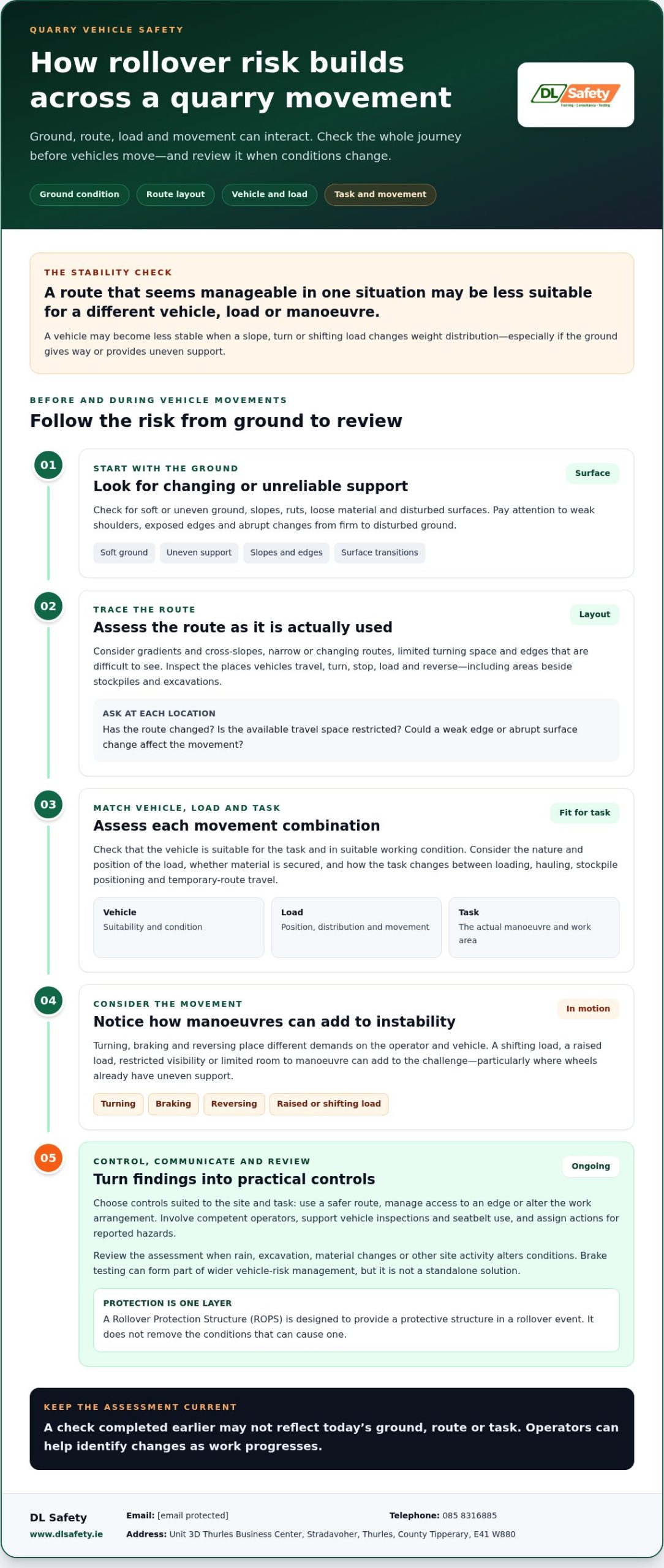
A vehicle’s centre of gravity is the point around which its weight is balanced. The lower and more centred it remains, the less readily the vehicle is tipped by a sideways force or uneven support. A slope, a turn or a shifting load can change how weight is distributed across the wheels. If the ground also gives way or falls sharply at one side, the vehicle may become less stable.
Rollover risk rises when a vehicle’s load and movement interact with ground or route conditions that reduce its stability. This explains why a route that seems manageable in one situation may be less suitable for a different vehicle, load or manoeuvre. A level approach on firm ground is not equivalent to a turn across a cambered surface beside a soft edge.
Small changes can compound. For example, a vehicle travelling across a slope may encounter ruts that make its wheels sit unevenly; if one side of the route is also soft, support can differ further from side to side. A sudden turn or braking action may then add movement at a point where the vehicle already has less stable support. This is why assessment should consider the route as it is actually used, not just its appearance from a fixed viewpoint.
How do ground and route conditions affect stability?
Gradients and cross-slopes affect how the vehicle sits, while ruts, loose material and soft ground can create uneven or unreliable support. Surface transitions, such as moving from a firm haul route onto a disturbed area, deserve attention too. Inspect turning areas, loading points and reversing locations, where vehicles may manoeuvre close to stockpiles, excavations or edges. A route edge can be particularly concerning if it is difficult to see or the available travel space is narrow.
There is no single assumption that fits every quarry. Ground condition and route layout can vary across the same site and change with work activity or weather. Identify where vehicles travel, turn, stop and reverse, then assess those locations in their current condition. If the route has changed, the previous assessment may no longer describe the movement operators are being asked to make.
How can load and vehicle movement change the risk?
Unevenly distributed or unsecured material can affect how a vehicle balances; a load may also shift during travel or a manoeuvre. Turning, braking and reversing each place different demands on the operator and vehicle, especially where visibility or room to manoeuvre is restricted. Travelling with a raised load can also change the vehicle’s stability, so the task should be planned around the machine’s intended use and the ground beneath it.
Use the vehicle manufacturer’s guidance for vehicle-specific operating instructions, and make sure the planned movement reflects those instructions. Avoid relying on a generic slope limit or rule of thumb: the vehicle, attachment, load and site conditions all matter. Clear routes, suitable turning space and well-defined loading and reversing arrangements can help prevent avoidable manoeuvres. A site-specific review of quarry traffic management design can help translate route observations into practical arrangements.
Which quarry rollover controls work together most effectively?
No single measure addresses every rollover hazard. Effective prevention combines controls that reduce exposure to unstable ground or risky movements with measures that support the vehicle and operator. The right mix depends on the vehicle, task and quarry layout, so assess what each control can do and where additional safeguards are needed.
| Control | Purpose and where it helps | What it cannot address alone |
|---|---|---|
| Route design and traffic arrangements | Direct vehicles along suitable routes, manage access near edges and reduce conflicts between movements. | Won’t keep a route safe if ground conditions change or the route isn’t followed. |
| Ground inspection and maintenance | Identify and address deterioration, uneven surfaces and concerns at haul routes, turning areas or loading points. | Can’t control vehicle suitability, load handling or operator decisions by itself. |
| Vehicle suitability and pre-use checks | Help ensure the vehicle is appropriate for its task and identify defects or concerns that need action. | Don’t compensate for an unsuitable route or unsafe manoeuvre. |
| Operator competence and task controls | Help operators recognise changing conditions and carry out planned movements safely. | Training alone can’t correct a hazardous layout, weak ground or defective vehicle. |
| Seat belts and rollover protection | Provide safeguards for the operator if a vehicle tips, when correctly fitted and used as intended. | Don’t prevent the conditions that may cause a rollover. |
How do site and traffic controls reduce exposure?
Plan routes around the work, not just the shortest path between locations. Clear arrangements for one-way movements, separation of vehicles and people, and access near edges can reduce conflict and avoid unnecessary manoeuvres. Include haul-route inspection and maintenance in site controls, with a way for operators to report changes such as rutting, soft patches or blocked turning areas. Traffic arrangements need to reflect actual movements and be reviewed when work areas or routes change.
What can vehicle checks, protection and training contribute?
Pre-use checks can flag a defect or other concern before work begins, but findings need to lead to action. Seat belts should be worn as intended, while rollover protection should be appropriate to the vehicle and maintained for its intended use. Check manufacturer guidance for vehicle-specific instructions and relevant protection specifications; don’t assume the same arrangement applies to every machine. Operator competence supports good decisions, particularly when conditions or tasks change.
Brake performance is one part of vehicle safety, not a rollover-specific control and not a guarantee against a tip. For information about on-site quarry vehicle brake testing, consider how testing can sit alongside route planning, ground management, vehicle checks and operator training. This layered approach is central to preventing vehicle rollovers in quarries: each measure has a role, and the controls work best when they address different parts of the risk.
How to put a quarry rollover-prevention plan into practice
A workable plan turns risk assessment into clear actions for the people managing and carrying out vehicle movements. It should identify the tasks and locations that need attention, set out controls operators can follow, and provide a way to respond when conditions change. Use your site’s risk-assessment process to prioritise action, rather than relying on an invented scoring system.
Identify the movements, assess the hazards, assign practical controls, brief the workforce, then check and review. Adapt this sequence to your site procedures:
- Map vehicle work. List mobile plant and vehicles, the tasks they perform, routes used, loading and unloading areas, turning points and reversing locations. Include temporary or less frequent movements, not only routine haulage.
- Assess conditions and exposure. Record relevant ground and route changes, who could be affected, existing controls and any gaps. Ask operators where surfaces soften, visibility is restricted or manoeuvres are difficult, since their experience can reveal problems a desk-based review may miss.
- Choose and assign controls. Decide what needs to change, such as a route arrangement, ground maintenance, task method or vehicle check. Give each action an owner and a clear point for follow-up, so findings don’t remain as general recommendations.
- Brief and prepare the team. Explain the relevant route, hazards, controls and reporting process to operators and other workers involved in the movement. Build proportionate pre-work checks into the routine, including a way to flag defects or changed ground conditions before proceeding.
- Review what happens in practice. Check whether controls are being used and remain suitable. Revisit the assessment after relevant site or task changes, incidents, near misses or audit findings, and update actions where needed.
How should a site assess and prioritise rollover hazards?
Keep the assessment specific enough to guide decisions. For example, distinguish a regular haul route from a changing access track, and note whether the concern is the surface, limited turning space, nearby edge or interaction with another movement. Record who may be exposed and what is already in place. Then use the site’s established risk-assessment process to determine which gaps need attention first and who will address them.
How can controls become part of everyday work?
A plan is useful only if it reaches the workface. Brief operators on route changes and controls before affected movements, and make reporting concerns straightforward. Agree how work will pause or be redirected if an operator finds a new hazard, then ensure the concern reaches someone able to act. Review the plan with operators after changes or findings, and close out assigned actions rather than simply recording them.
For Irish quarries, check current Health and Safety Authority guidance and the applicability of any relevant requirements before describing a particular legal provision as a specific duty. DL Safety’s health and safety site audits can support a structured review of site controls and follow-up actions.
Keep quarry rollover prevention effective with testing, review and support
A prevention plan needs to keep pace with the quarry. Routes may be altered, ground disturbed, vehicles changed or tasks carried out under different operating conditions. A control that suited yesterday’s layout may no longer address today’s risks, so make review part of routine safety oversight rather than waiting for a major event. This ongoing attention helps keep preventing vehicle rollovers in quarries grounded in current site conditions.
What should managers review after a change or safety concern?
Revisit the relevant vehicle, route, ground, load and task controls when operations or conditions change. A new access route, for example, may affect turning space and the ground supporting vehicle movements. Incidents, near misses, inspection findings and outstanding audit actions can also highlight where controls need attention.
- Record what changed or what concern was raised, including the location and work activity involved.
- Review which controls were in place and whether they were practical and followed.
- Identify contributing factors, then assign follow-up actions to an appropriate person.
- Share relevant learning with operators and others affected by the change.
Accident investigation can help build an understanding of how vehicle, task and site conditions contributed to an event. The aim is to identify learning and suitable follow-up, rather than assume blame before the circumstances have been examined. Make sure agreed actions are tracked and their effectiveness reviewed.
How can specialist support strengthen ongoing prevention?
Different forms of support address different parts of vehicle-risk management. On-site quarry vehicle brake testing provides information about brake performance, while traffic management design focuses on how vehicles move around the site. Health and safety site audits can help identify gaps in safety arrangements and track actions that need follow-up. None of these replaces controls for rollover hazards, but together with competent operators and active site management they can contribute to a broader approach.
Monthly Safety Support Packages provide ongoing safety and compliance support, helping businesses maintain oversight and follow through on identified actions. The value is in keeping review and improvement connected to day-to-day operations, as routes, work areas and equipment change. Controls should be revisited as needed, not treated as permanent simply because they were once recorded in a plan.
If you’d like support reviewing vehicle safety arrangements at your quarry, discuss quarry safety support with DL Safety.
Visit www.dlsafety.ie, email info@dlsafety.ie or call 085 8316885. DL Safety, Unit 3D Thurles Business Center, Stradavoher, Thurles, County Tipperary, E41 W880.
Make the next safety review count
A practical next step is to bring one real vehicle movement into your next site safety discussion. Choose a route, loading area or task that operators use regularly, then ask what has changed, what makes the movement difficult and what action would make it safer. This keeps preventing vehicle rollovers in quarries connected to the conditions people encounter on site, rather than leaving the plan as paperwork.
Agree who will follow up on any action and when the team will revisit it. A small, clearly owned improvement can help build a stronger routine of speaking up, responding to changing conditions and learning from experience. Keep the discussion open to operators and managers alike, so practical knowledge informs decisions and concerns have a clear route to resolution.
If you’d like to explore a practical next step for your site, discuss quarry vehicle safety support with DL Safety. A considered plan, supported by regular attention, can help your team move forward with greater confidence.
Frequently Asked Questions
What is the most common cause of vehicle rollovers in quarries?
There isn’t one universal cause of quarry vehicle rollovers; incidents can arise when several conditions come together. A loaded vehicle taking a turn on a sloping or soft section of haul road may face different stability demands than the same vehicle on firm, level ground. Speed, visibility, vehicle condition and how the task is carried out can also matter. Review the specific movement and circumstances rather than assuming a single cause.
How can quarry managers reduce the risk of vehicle rollovers?
Managers can reduce risk by matching controls to the vehicle movements and conditions on their site. Make sure operators know how to raise concerns, particularly when routes change or a planned movement no longer feels suitable. Agree who can pause or redirect work while a concern is assessed, and pass relevant updates between shifts. A clear way to report and follow up issues helps turn the plan for preventing vehicle rollovers in quarries into everyday practice.
Can seat belts prevent injuries in a quarry vehicle rollover?
Seat belts can help restrain an operator in the seat during a rollover, but they don’t prevent the vehicle from tipping. Their protective role depends on being worn correctly and used with the vehicle’s intended protective arrangements. Include belt condition and use in relevant vehicle checks and operator briefings. A seat belt is one safeguard, not a substitute for managing hazardous ground, planning movements or responding to changing site conditions.
What happens if a quarry haul road becomes soft or uneven?
Keep vehicles off the affected stretch until its condition and safe use have been assessed. If an operator notices soft ground or unevenness during a journey, they should avoid making an unplanned manoeuvre across it, alert the appropriate site contact and report the location and movement involved. Managers can then review the route and decide whether to restrict access, arrange ground work or direct vehicles elsewhere before movements resume.
How often should quarry vehicles be checked for rollover risks?
Use routine pre-use checks alongside a review whenever a vehicle, task, route or operating condition changes. A check at the start of work can identify a concern with the vehicle, while a fresh look at a route may be needed after ground disturbance or weather-related change. Set checks within site procedures and follow applicable vehicle guidance. Verify current Irish requirements before treating any particular inspection interval as a legal duty.
Does quarry vehicle brake testing prevent rollovers?
No. Brake testing can provide information about a vehicle’s braking performance, but it doesn’t assess ground stability, route layout, load handling or every movement that could contribute to a rollover. Use test findings as one input to vehicle-risk management, alongside route controls, suitable work practices and operator competence. DL Safety provides on-site quarry vehicle brake testing; it supports a broader prevention approach rather than guaranteeing that a rollover won’t occur.